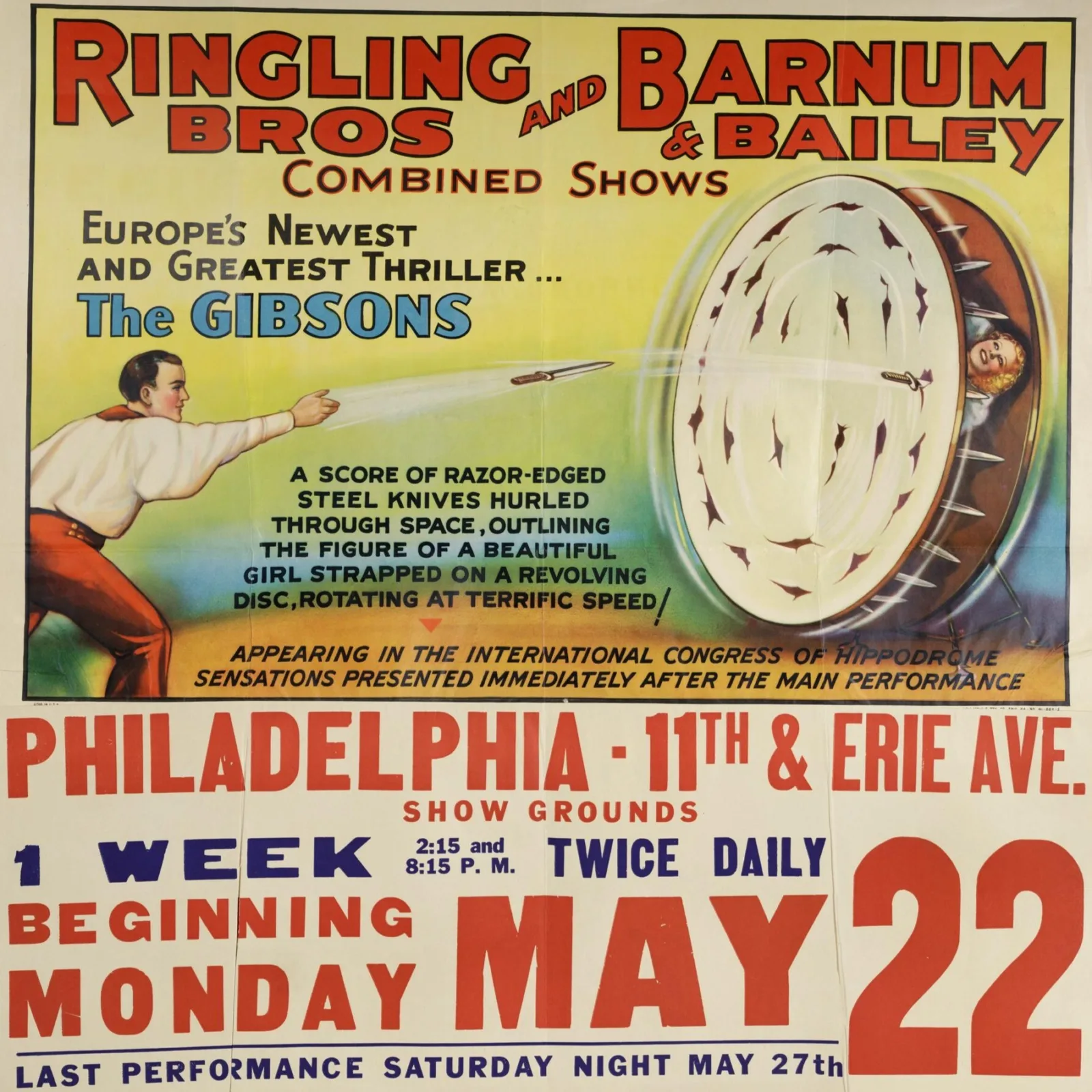
From wagon to rail, the American circus brought entertainment to the masses and created an insular community of artists, performers, and misfits. These nomads labored from town to town, sometimes setting up the big top for only one day, only to spirit away in the night and wake at their next destination. Although not an American creation, the circus as we know it today is steeped in American tradition offering a bit of vaudeville, athleticism and imagination. World Circus Day is celebrated on April 18 to shine a spotlight on the Newberry's Circus highlights.
Circus enthusiast Irving Kane Pond was born in Ann Arbor, Michigan in 1857. He received a degree in civil engineering from the University of Michigan. His architectural career took him to Chicago to work at the offices of William L. Baron Jenn and Solon S. Beman. In 1886, he and his brother Allen formed the Chicago architectural firm of Pond and Pond. Their work is among the best examples of Arts and Crafts architecture in Chicago. The dining hall of the Jane Addams Hull House is one of their marquee projects and has been declared a national landmark. Pond’s interest in promoting fine arts and social betterment led to his involvement with several architectural, literary, and social clubs. He founded the Little Room and the Cliff Dwellers and was an active member of the Chicago Literary Club. All three of these Clubs' archives are part of the Newberry’s holdings. Pond served as the President of the American Institute of Architects and most appreciably Vice President of the Circus Fans Association. Pond bequeathed his collection of material relating to the American Circus to the Newberry in 1939. Librarian George Utley noted in the library’s annual report that year, “As the old-time circus is rapidly vanishing from the American scene... this collection of books relating to it constitutes a rather important picturesque chapter in American social history.”
The bulk of Pond’s collection contains publicity and programs, representing over twenty-two circuses that date from the late nineteenth century, a time when circus promotion and the printing industry intertwined. Highlights include an 1891 Barnum and Baily broadsheet, an Adam Forepaugh program from their 1893 World’s Colombian Exhibition show, photographs of performers, and personal ephemera from his circus friends. Pond’s drawings of performers for his 1937 publication, Big Top Rhythms, capture his deep understanding of the circus culture and performers.
James Dunwoody Collection of American Circus Posters
Given to us by Mark and Margaret Hausberg, in 2014, this incredible collection includes more than 800 posters and beyond the big names like Barnum and Ringling, you will find unexpected smaller local circuses as well as a few non-circus oddities.
Dating from the early twentieth century, the vibrant images with their embellished lettering and colorful fonts would indulge both circus fans and printing historians alike. In the late nineteenth century, circus promotion and the printing industry were intertwined. It was during this period that printers began to specialize to fit the needs of their clientele. In addition to posters, printers produced route cards, handbills, and other materials to advertise the circus coming to town.
Enquirer Printing Company Records
Located in Cincinnati, Ohio, the Enquirer supplied entertainment businesses with their printing needs, many of them circuses. The collection contains correspondence on a variety of colorful circus letterheads. The letters largely concern orders for posters, small advertisements, tickets, and business cards. The papers include a fair amount of circus lore: news about animal purchases and new acts (requiring new or changing artwork), remarks on competition between circuses, and general circus gossip. The ledger sheets include information on posters for touring companies that offered musical revues, vaudeville, and minstrel shows.
To enjoy the sights and splendor of the circus, plan a visit to the Newberry to consult the above collections and more. All you need to do is register for a reader's card. On your first visit, stop by our Welcome Center, located in the lobby of the library. A librarian can assist you in selecting items from any of these collections. For reference questions or assistance in using our collections, send an email to reference@newberry.org.
Jo Ellen McKillop Dickie is the Newberry’s Reference Services Librarian and Selector for Reference.