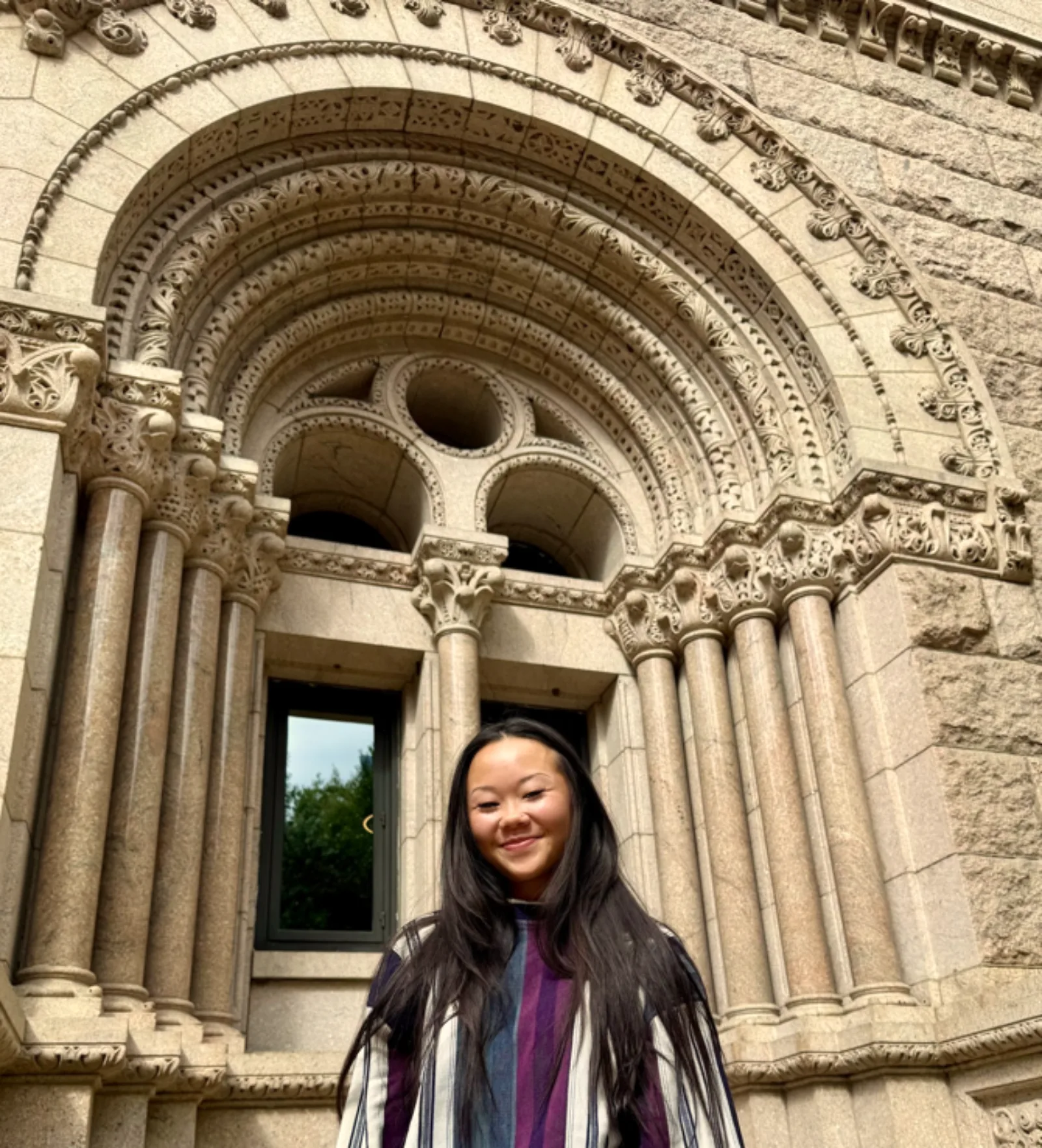
In May 2025 I had the most delightful opportunity to be a micro-intern at the Newberry Library. Graduating earlier that month, I could not have been more excited to continue engaging with both art history and, one of my favorite things ever, old books! My task was to find items from the Newberry collections for a future program about the medieval and Renaissance influences on Chicago's architecture. During this project I was able to engage with more than just books, but also letters, maps, and manuscripts.
As a visual learner, I first requested many souvenir picture books. I wanted to see what Chicago’s architecture looked like in the past and how medieval and classical forms had been used, and how they endured into or disappeared before our present day. The handheld picture books I found revealed scenes of Chicago in the 1800s and early 1900s that I recognized, and others that I didn’t. They reminded me of how much the Great Chicago Fire of 1871 reshaped the city, but also how much the city has transformed to become what we know today.
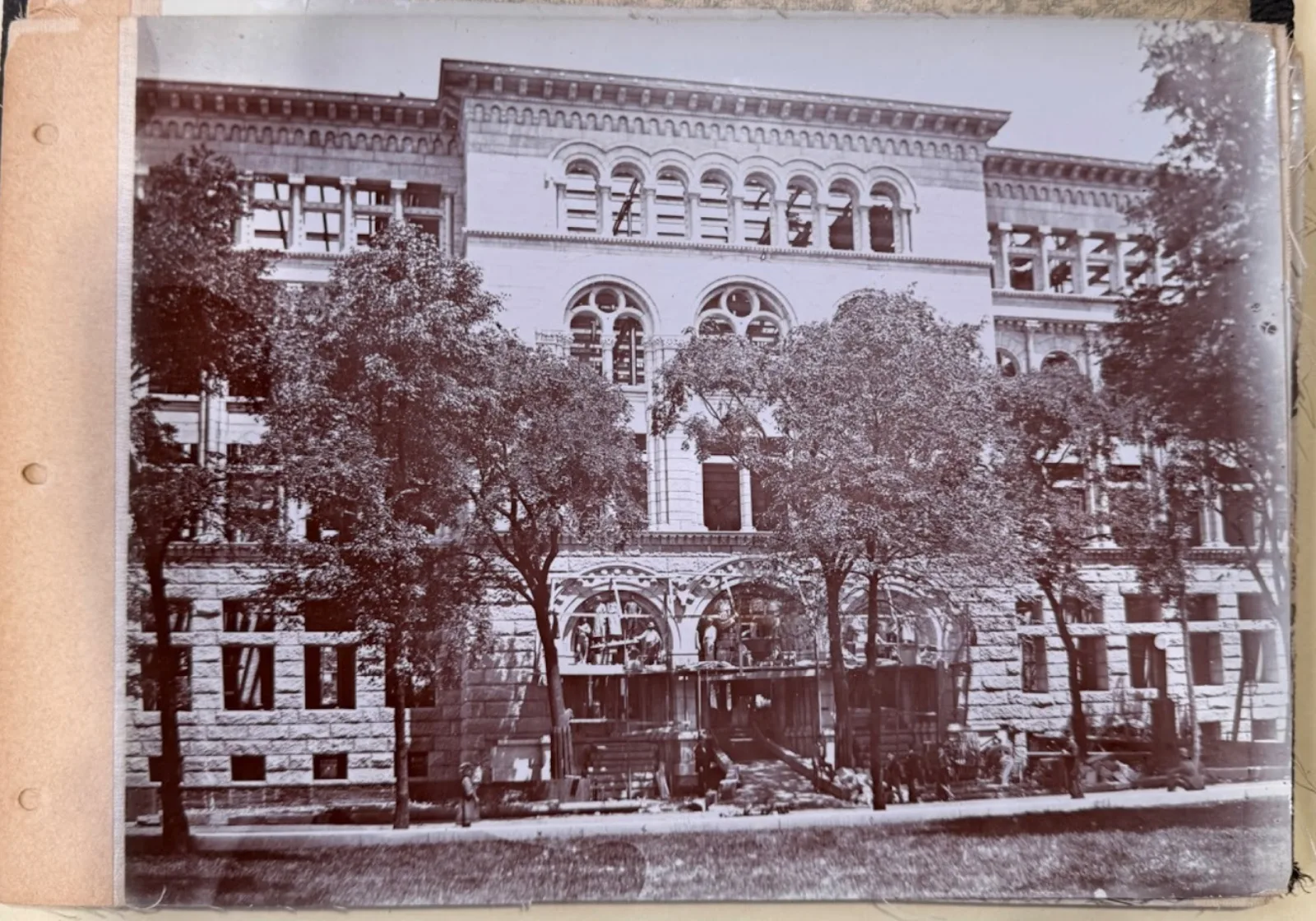
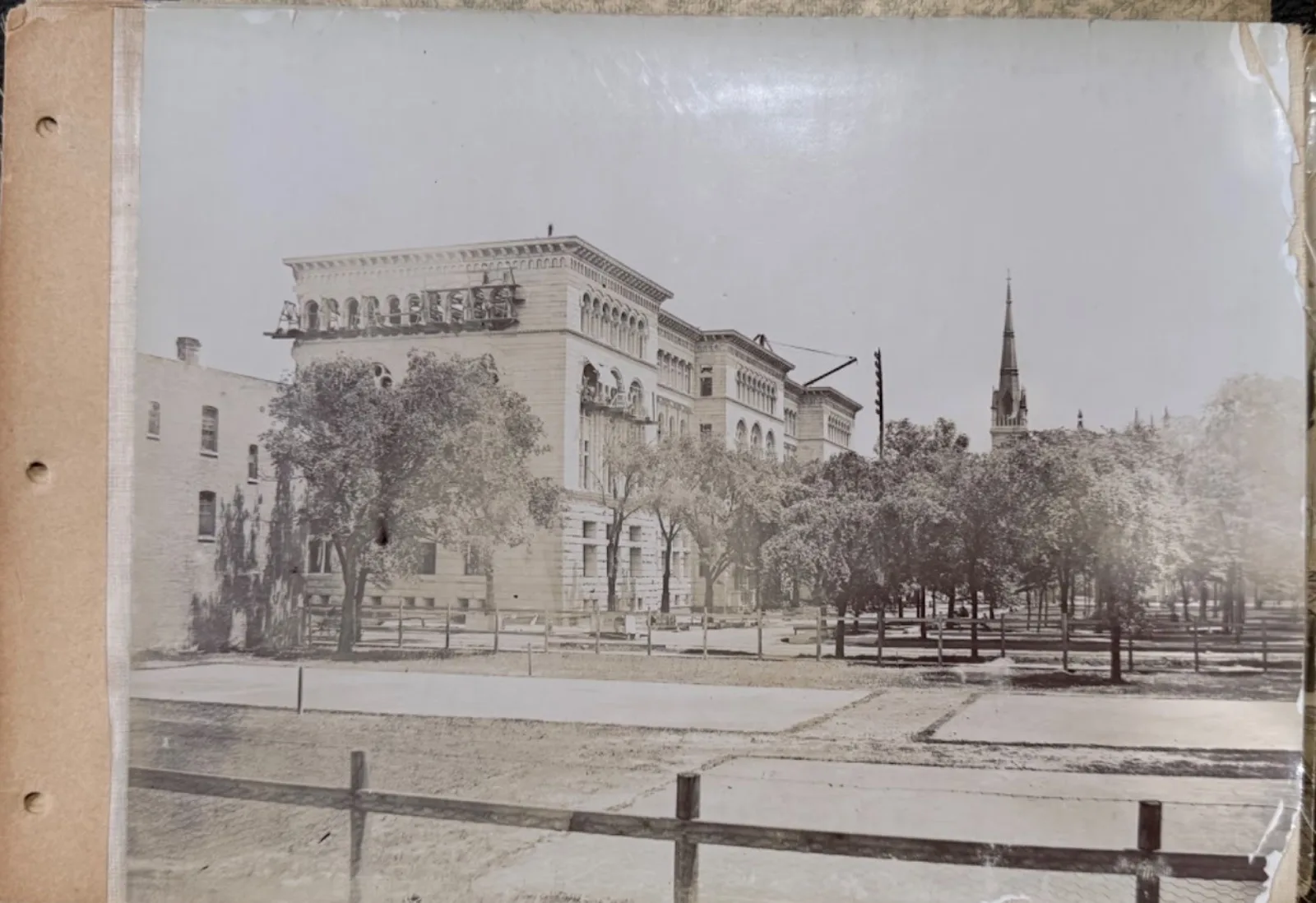
One album I found was an unbound collection of photographs during the time of the Newberry Library’s construction. The library was built by Henry Ives Cobb, himself a librarian as well as an architect, in the 1890s. The construction was funded by Walter L. Newberry’s estate and overseen by its trustees.
One book I ordered, Horder’s Pictorial Chicago: Souvenir Book of Views (1930), compiled birds-eye views of the city and shots of its major attractions, specifically the new construction of the iconic Chicago tour stops, Soldiers Field, the Field Museum, and the lake front.
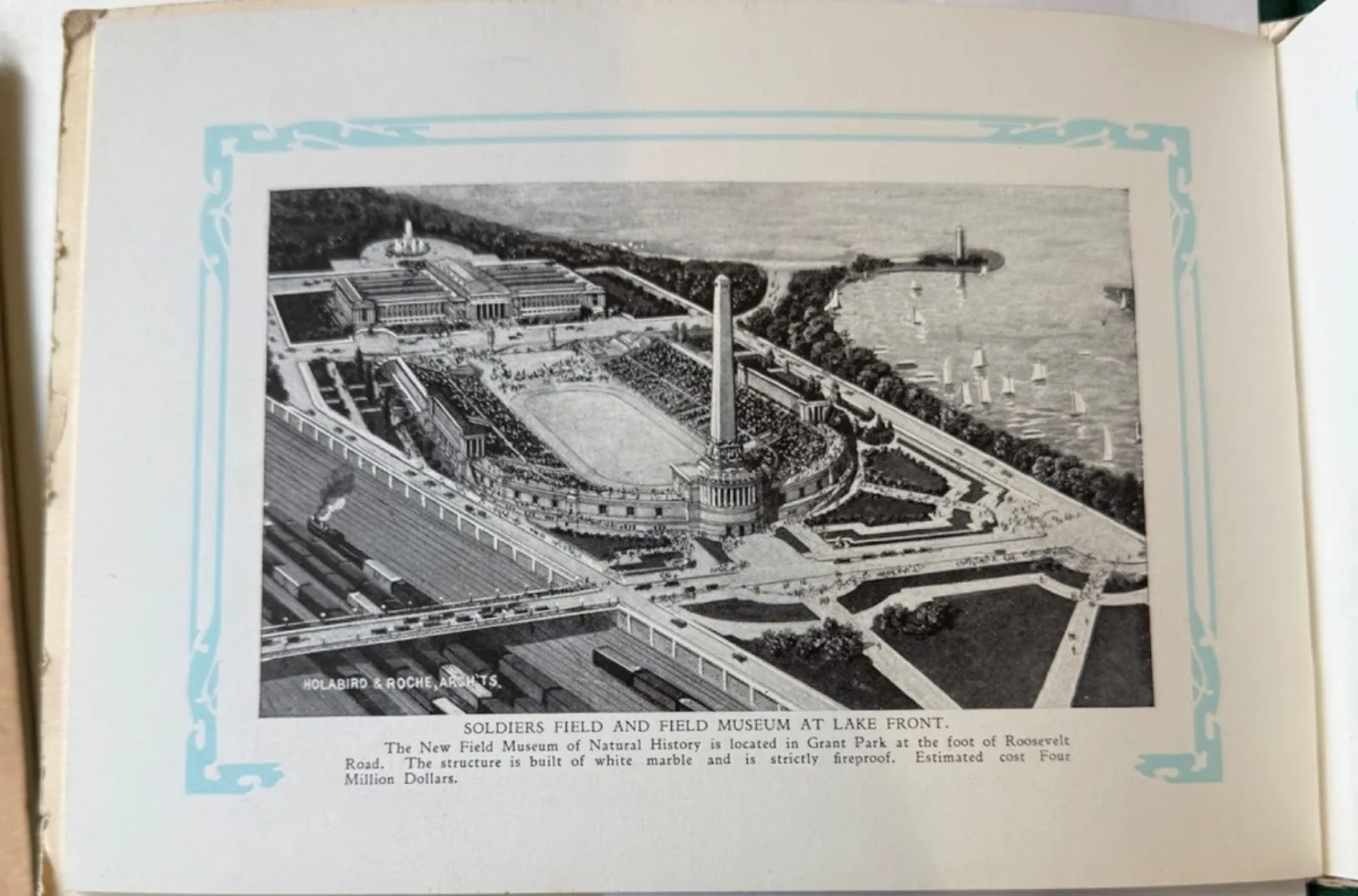
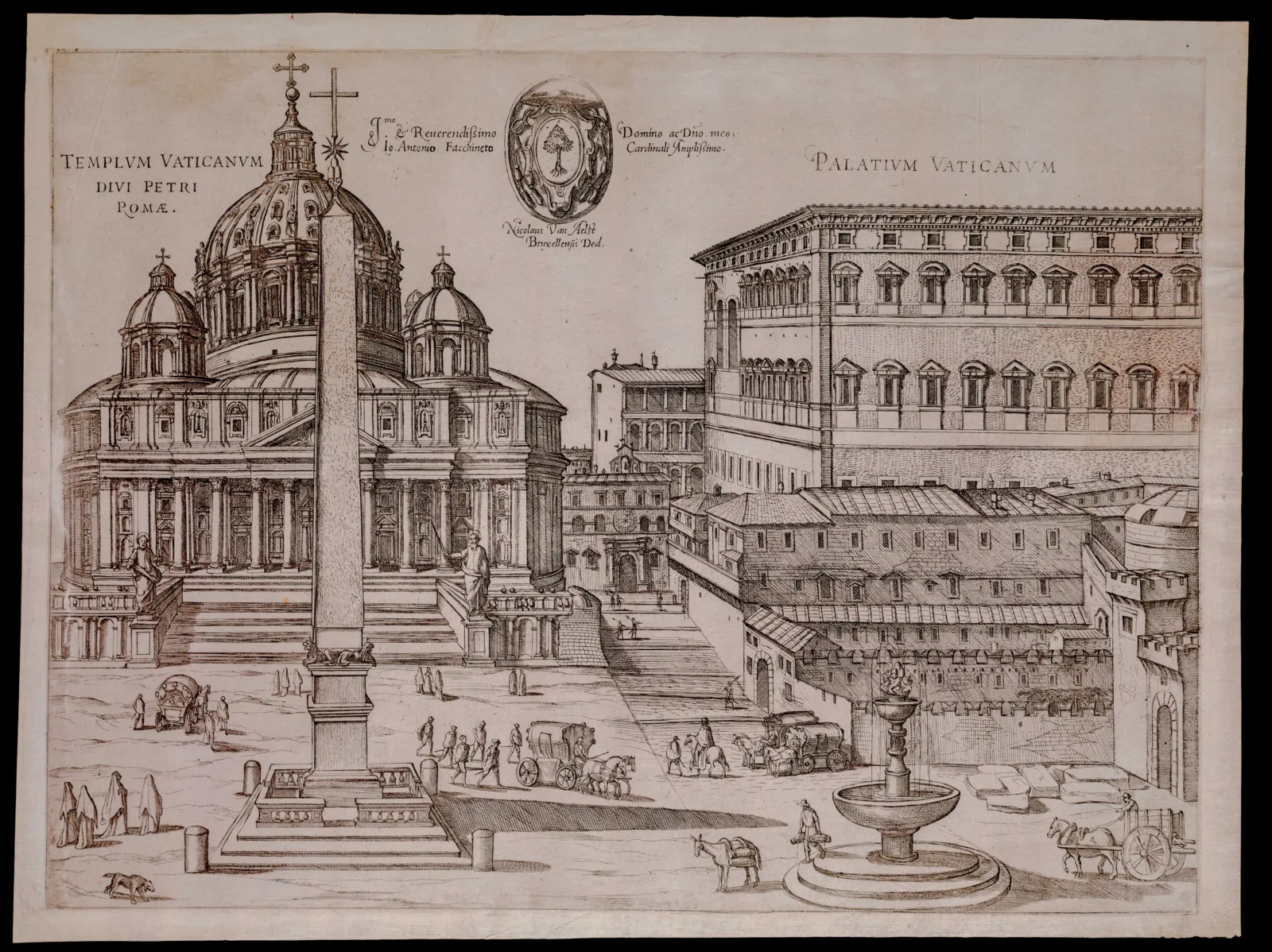
Strikingly, the 1930 view of the city’s Soldier Field and Field Museum deeply resembles the composition of St Peter’s Square in Rome. The photo from 1930, shows an obelisk placed just at the edge of Soldier Field. The obelisk in Chicago appears as a nod to Pope Sixtus V’s construction project in which he raised obelisks around Rome in 1585. Taken from Egypt and raised in Rome as a statement of power, obelisks around early modern Rome marked major pilgrimage sites and guided travelers on their religious journey. An obelisk standing in front of the Field Museum at the edge of Soldier Field in Chicago, then, is a clear American callback to city planning trends developed during the Renaissance. Chicago welcomes and draws viewers into the area by also employing curving arms like Gian Lorenzo Bernini’s which encompass the entrance to St. Peter’s. Although Chicago used the composition to organize a civil space and Rome for a religious one, its grand composition stood to boast power like that of the architecture at St. Peter’s in Rome.
While the view of the Field Museum and Soldier Field bears far less similarities to Rome today, seeing the older plans for the space was an especially exciting find, because it proved it was rooted in Renaissance design. Finding exciting connections between the art and architecture of the premodern and the present day during my time as an intern at the Newberry Library was so motivating and fulfilling. I gained real experience in the academic environment outside of course work, and it only continued to fuel my interest in a career in archival research, art history, and most of all, learning.