Scroll down for Spanish / Desplázate hacia abajo para español
What happens when we look at Chicago’s turbulent 1960s not just through politics or protest, but through the lens of religion?
This question guided a series of interdisciplinary conversations held in autumn of 2025 for the Beyond Belief initiative, which brought together scholars of religious studies, history, anthropology, sociology, architecture, and urban planning. Their discussions reveal a powerful insight: in mid-century Chicago, religion, far from being confined to pews and pulpits, helped shape neighborhoods, fuel social movements, and redefine what counted as “sacred space.”
One of the most striking findings is that sanctuaries were everywhere. Certainly churches, synagogues, mosques, and temples mattered. But homes, storefronts, beaches, and even streets became sacred through use and intention. The former residence of the Honorable Elijah Muhammad in Woodlawn functioned as a private home, but also as a spiritual and political center of the Nation of Islam, hosting global figures and anchoring a new religious vision in Black Chicago. Storefront churches and mosques flourished in disinvested neighborhoods, turning former delis and cleaners into places of worship. On the South Side, groups such as the Black Coptic Church transformed public beaches like Rainbow Beach into temporary sacred zones for baptisms.
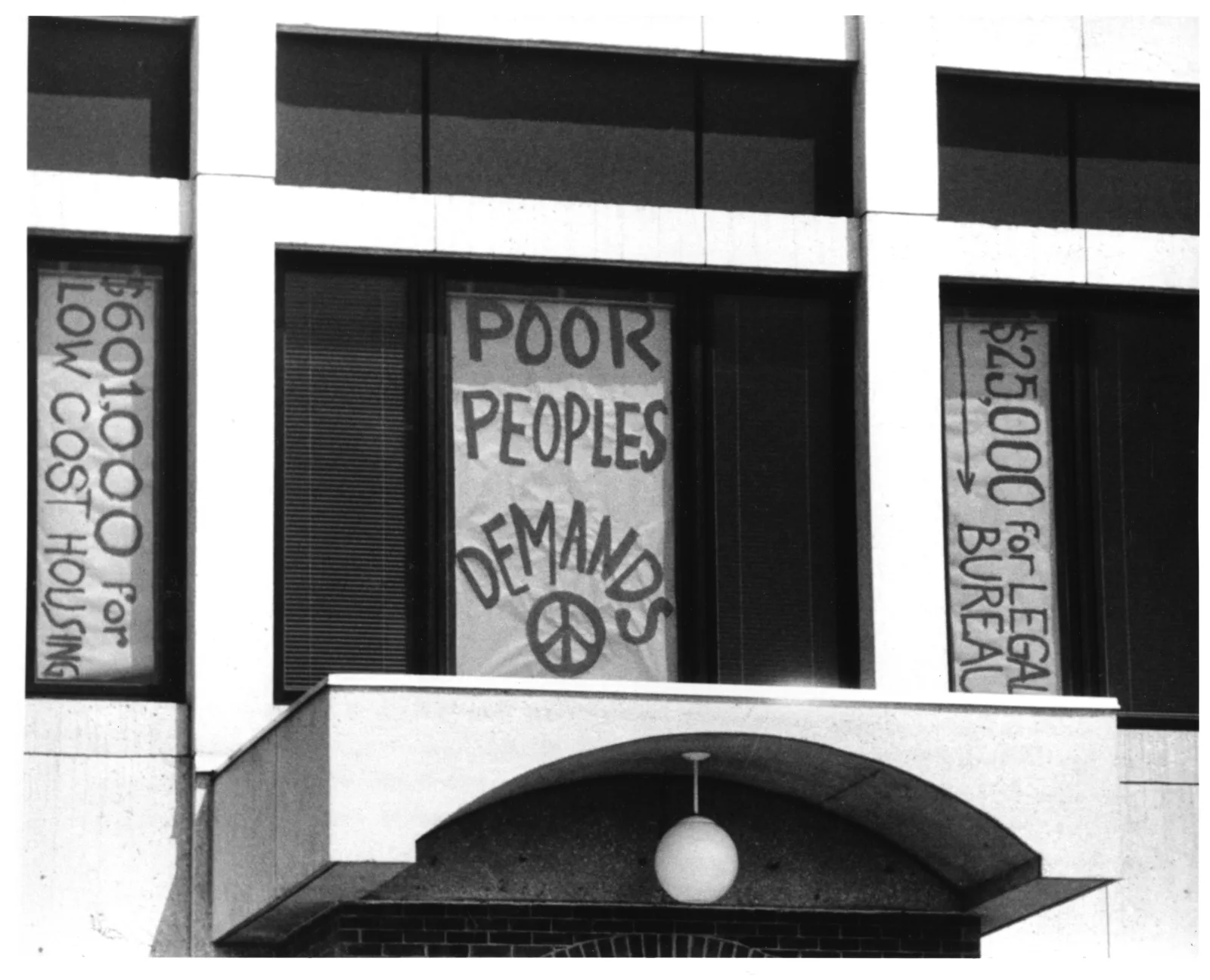
Even more dramatically, sacred spaces became sites of protest. In 1969, the Young Lords occupied buildings like McCormick Theological Seminary, then in Lincoln Park, to demand resources for Puerto Rican neighborhoods. In addition to serving as houses of worship, churches became battlegrounds over who had the right to shape the city.
Chicago’s religious landscape also tells a story of migration. As Jewish families moved from Lawndale and South Shore to Rogers Park, Skokie, and the North Shore, congregations faced wrenching decisions: follow their members or stay as witnesses to racial change? At Temple KAM Isaiah Israel in Hyde Park, Rabbi Jacob Weinstein famously chose to remain, framing the decision as a moral commitment to civil rights.
Catholic parishes faced a different dilemma. Because parish boundaries were geographic, they could not simply relocate a church. When African Americans moved into formerly white neighborhoods during the Great Migration, some Catholic communities resisted integration fiercely, while others adapted, or lost members to “white flight.” The parish system could turn demographic change into theological and territorial crisis.
Meanwhile, in Pilsen and Little Village, Mexican immigrants often joined existing Catholic parishes, while many Puerto Rican migrants, marginalized within the Catholic hierarchy, established storefront churches. Religious institutions became markers of belonging and survival amid rapid neighborhood transformation.
Another key theme is the moral framing of social activism. Religious leaders often described civil rights, housing equity, and labor struggles as sacred obligations, not policy debates. Interracial religious councils, including the National Conference of Christians and Jews, worked to articulate the freedom struggle in explicitly moral language.
Faith-based movements also shaped tactics. The Catholic Cursillo Movement empowered Latino/a laypeople to claim leadership roles in church and community. Nonviolent strategies, influenced by global anti-colonial movements, were adapted by groups like the Fellowship of Reconciliation to resonate with American Christian audiences before spreading more widely through civil rights campaigns.
The conjunction of faith communities and struggles for social justice also empowered some people traditionally barred from leadership roles. Across religions and communities, women performed much of the organizing labor even when men held formal titles. Youth activists used religious institutions as bases of power when the political system excluded them.
These efforts unfolded within a city dominated by the Democratic Machine of Mayor Richard J. Daley, where churches and other institutions could be pressured, rewarded, or warned against hosting controversial figures. Religious institutions were moral actors—but also political ones.
The scholar meetings also underscored that no monolithic “Black church” or “Latino community” existed. Spiritual expression evolved creatively. Some Black Catholics adorned altars with African drums and images of Malcolm X. In Pilsen, public reenactments of the Via Crucis connected Christ’s suffering to neighborhood struggles over drugs and immigration. Haitian Catholics navigated language and class through varying use of French and Creole. Indigenous practitioners emphasized religion as lived practice, “doings” rather than doctrines.
Taken together, these conversations suggest that Chicago’s religious history is layered like a palimpsest: a synagogue becomes a Black church, then a Latino Pentecostal storefront. A private home becomes a global religious headquarters. A beach becomes a baptismal font.
For Beyond Belief, this means telling a story that moves beyond buildings and denominations. It means mapping change, collecting oral histories before they are lost, and inviting Chicagoans to see the blocks they inhabit as sites of sacred transformation. In 1960s Chicago, religion did not stand apart from social change, it served as a force to make change possible.
Español
¿Qué sucede cuando nos enfocamos en la turbulenta década de 1960 en Chicago no solo a través de la política o las protestas, sino desde la perspectiva de la religión?
Esta pregunta guió una serie de conversaciones interdisciplinarias celebradas en otoño de 2025 para la iniciativa Más allá de la fe, que reunió a más de veinte académicos de estudios religiosos, historia, antropología, sociología, arquitectura y planificación urbana. Estos debates revelan una idea poderosa: lejos de limitarse a los bancos y púlpitos, la religión ayudó a dar forma a los barrios, impulsó movimientos sociales y redefinió lo que se consideraba “espacio sagrado” en el Chicago de mediados de siglo.
Uno de los hallazgos más sorprendentes es que había santuarios por todas partes. Sin duda, las iglesias, sinagogas, mezquitas y templos eran importantes. Pero las residencias privadas, los locales comerciales, las playas e incluso las calles se convirtieron en lugares sagrados a través del uso y la intención. El antiguo hogar del honorable Elijah Muhammad en Woodlawn funcionaba como residencia privada, pero también como centro espiritual y político de la Nación del Islam, acogiendo a figuras mundiales y afianzando una nueva visión religiosa en la comunidad negra en Chicago. Las iglesias y mezquitas en locales comerciales florecieron en barrios desatendidos, convirtiendo antiguas tiendas de delicatessen y tintorerías en lugares de culto. En el Lado Sur, grupos como la Iglesia Copta Negra transformaron playas públicas como Rainbow Beach en zonas sagradas temporales para bautismos.
Aún más dramáticamente, los espacios sagrados se convirtieron en lugares de protesta. En 1969, los Young Lords se apoderaron de edificios como el Seminario Teológico McCormick, entonces ubicado en Lincoln Park, para exigir recursos para los barrios puertorriqueños. Además de servir como lugares de culto, las iglesias se convirtieron en campos de batalla en la lucha por el derecho a dar forma a la ciudad.
El panorama religioso de Chicago también describe una historia de migración. A medida que las familias judías se trasladaban de Lawndale y South Shore a Rogers Park, Skokie y North Shore, las congregaciones se enfrentaban a decisiones desgarradoras: ¿seguir a sus miembros o quedarse como testigos del cambio racial? En el Templo KAM Isaiah Israel de Hyde Park, el rabino Jacob Weinstein optó por quedarse, justificando la decisión como un compromiso moral con los derechos civiles.
Las parroquias católicas se enfrentaron a un dilema diferente. Debido a que los límites parroquiales eran geográficos, no podían simplemente reubicar una iglesia. Cuando los afroamericanos se mudaron a barrios anteriormente blancos durante la Gran Migración, algunas comunidades católicas se resistieron ferozmente a la integración, mientras que otras se adaptaron o perdieron miembros debido a la “fuga de los blancos”. En el sistema parroquial, el cambio demográfico podía convertirse en una crisis teológica y territorial.
Mientras tanto, en Pilsen y Little Village (La Villita), los inmigrantes mexicanos a menudo se unían a las parroquias católicas existentes, mientras que muchos migrantes puertorriqueños, marginados dentro de la jerarquía católica, establecían iglesias en locales comerciales. Las instituciones religiosas se convirtieron en marcadores de pertenencia y supervivencia en medio de la rápida transformación de los barrios.
Otro tema clave es el marco moral del activismo social. Los líderes religiosos solían describir los derechos civiles, la equidad en la vivienda y las luchas laborales como obligaciones sagradas, no como debates políticos. En el esfuerzo por definir la lucha por la libertad, los consejos religiosos interraciales —incluida la Conferencia Nacional de Cristianos y Judíos— se enfocaron en un lenguaje explícitamente moral.
Los movimientos basados en la fe también repercutieron en las tácticas. El movimiento católico Cursillos de Cristiandad empoderó a latinos laicos para que reclamaran roles de liderazgo en la iglesia y la comunidad. Grupos como la Fraternidad de Reconciliación adaptaron estrategias no violentas, influenciadas por movimientos anticoloniales globales, para resonar con el público cristiano estadounidense antes de difundirse más ampliamente a través de campañas de derechos civiles.
La conjunción de comunidades de fe y luchas por la justicia social también empoderó a algunos grupos de personas a los que tradicionalmente se les había negado el acceso a puestos de liderazgo. Continuamente, las mujeres han desempeñado gran parte del trabajo organizativo en las religiones y las comunidades, incluso cuando los hombres ostentaban los cargos formales. Los jóvenes activistas se apoyaron en las instituciones religiosas como bases de poder cuando el sistema político los excluía. Estos esfuerzos se desarrollaron en una ciudad dominada por la maquinaria demócrata del alcalde Richard J. Daley, donde se presionaba, recompensaba o amenazaba a las iglesias y otras instituciones para evitar que acogieran a figuras controvertidas. Las instituciones religiosas eran actores morales, pero también políticos.
En las reuniones, los académicos participantes también pusieron de relieve que no ha existido una “iglesia negra” o una “comunidad latina” monolítica. La expresión espiritual ha evolucionado de manera creativa. Algunos católicos negros adornaban sus altares con tambores africanos e imágenes de Malcolm X. En Pilsen, las representaciones públicas del Vía Crucis relacionan el sufrimiento de Cristo con las luchas del barrio en torno a las drogas y la inmigración. Los católicos haitianos han afrontado los retos del lenguaje y la clase mediante el uso variable del francés y el criollo. Los practicantes indígenas enfatizan la religión como práctica vivida, “acciones” más que doctrinas.
En conjunto, estas conversaciones sugieren que la historia religiosa de Chicago tiene múltiples capas, como un palimpsesto: una sinagoga puede convertirse en una iglesia negra, luego en una tienda pentecostal latina. Una casa privada puede transformarse en una sede religiosa mundial. Una playa puede servir como pila bautismal.
Para Más allá de la fe, este pasado estratificado implica contar una historia que trasciende los edificios y las denominaciones. Significa trazar un mapa del cambio, recopilar historias orales antes de que se pierdan e invitar a los habitantes de Chicago a considerar las cuadras de sus barrios como lugares de transformación sagrada. En el Chicago de la década de 1960, la religión no se mantuvo al margen del cambio social: fue motor para hacer posible el cambio.