Please note: This is an outdoor, in-person event taking place in Washington Square Park, across from the Newberry. Free and open to the public.
Celebrate the history of Chicago’s oldest public park with an afternoon of music, storytelling, games, food, and more.
Bughouse Square, as Washington Square Park is famously known, was once a cow path where farmers would bring their cattle for water. Over the years, it transformed into a dynamic gathering place that encouraged freedom of expression. For soapboxers, poets, artists, and activists of all stripes, the park became a stage where Chicagoans could discuss issues, perform, entertain, and enjoy warm summer days.
At this interactive and family-friendly event, we invite you to quench your thirst with cold drinks and chow down on tasty snacks from local food vendors as we revel in this park’s rich history. Get down to a DJ spinning music made in Chicago across the decades. Listen to stories of the most memorable moments in Bughouse Square history. And enjoy a variety of outdoor activities.
Schedule
1:00 to 3:00 pm Activities in the Park
Bubble Works
Baggo Bean Bag Game
Bocce Ball
Balloon Twister
Historical Photo-Op Banner
Free popcorn and cotton candy
1:30 pm Song and Story Performances
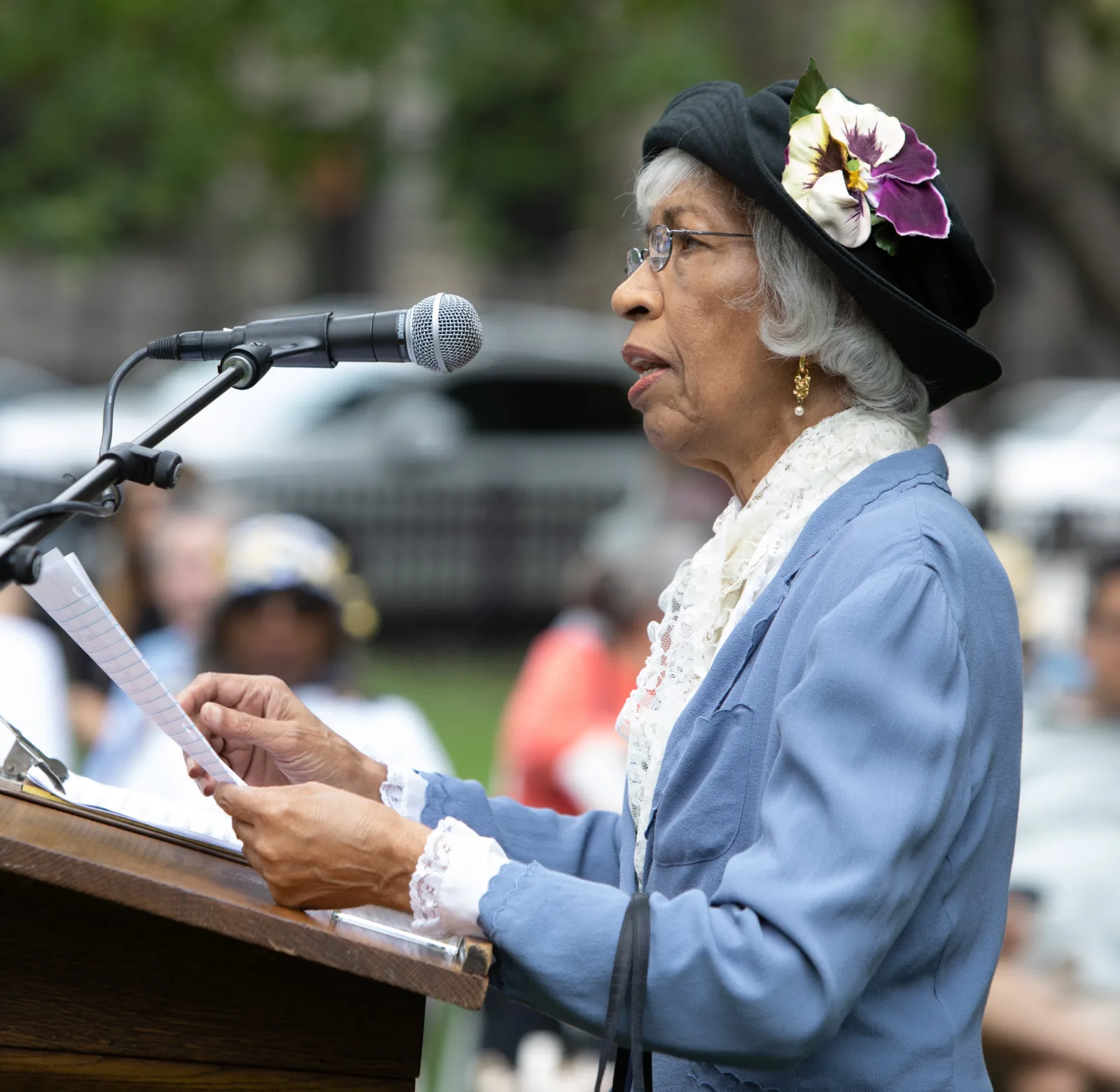
Alma Washington, Gary Chichester, and Rick Kogan will recall and re-enact significant milestones in the storied history of Bughouse Square, accompanied by music from different eras spun by DJ Dan Maloney. The Newberry’s Karen Christianson will emcee.
Speakers
Gary Chichester is a gay rights activist and cofounder of the Chicago Gay Alliance, which created Chicago’s first gay and lesbian community center. He has been involved in the annual Gay and Lesbian Pride Parade since its first march from Bughouse Square in 1970.
Rick Kogan, a senior reporter for the Chicago Tribune, hosts the popular weekly radio program “After Hours with Rick Kogan,” broadcast nationally. He inherited the title “Mayor of Bughouse Square” from his friend, the late Studs Terkel.
Alma Washington, an activist and actor, has appeared with many of Chicago’s premier theaters and in feature films and television movies. As part of her advocacy for labor unions and women’s rights, she has performed historic Lucy Parsons presentations since the 1990s.
Karen Christianson is Director of Public Engagement at the Newberry Library.
Bughouse Square History Timeline
- March 4, 1837: The City of Chicago was incorporated; the area that became the park was crossed by a cow path, with a well where farm families brought their cattle for water.
- September 4, 1842: Land for Washington Square Park was ceded to the city by Charles Butler, James Fitch, and Orsamus Bushnell, real estate developers who hoped to grow a fashionable neighborhood. Among others, attorney Mahlon D. Ogden, brother of the first mayor of Chicago William Butler Ogden, built a mansion facing the park.
- 1869: The city planted lawn and trees, laid down the diagonal walkways, and fenced the park.
- 1871: The Great Chicago Fire destroyed all but a handful of nearby structures, with the Ogden Mansion one exception.
- November 1893: The Newberry Library’s new building designed by architect Henry Ives Cobb opened, on the Ogden site.
- Late 19th Century: The area developed as prominent wealthy Chicagoans built in the neighborhood. The park also now became known as Bughouse Square – a gathering place where anyone could get up on a soapbox and hold forth on any subject they felt passionate about.
- 1906: Then-Alderman Robert R. McCormick, who later became publisher of the Chicago Tribune, donated his salary to build a fountain in the square.
- 1910s to 1940s: The high point of Bughouse Square as a free-speech mecca. Hoboes from the railyards, prohibitionists from nearby Moody Bible Institute, trade unionists, socialists, artists, college professors, atheists, suffragists, and people who had been in communication with Martians all had their say. Historically significant speakers included activist Lucy Parsons, poet Kenneth Rexroth, anarchist Emma Goldman, socialist Eugene Debs, attorney Clarence Darrow. The area became known as the Bohemian “Montmartre” of Chicago. By the mid-1930s, tour buses circled the park, allowing travelers to gawk at the speakers and hear snatches of “radical” thought.
- Mid-1950s: With the postwar clampdowns on Communists and radicals, activities in Bughouse Square slowed and the park’s fountain was removed.
- June 27, 1970: Chicago Gay Liberation movement activists held a rally in Bughouse Square, commemorating the one-year anniversary of New York’s Stonewall riots. Then participants marched to Daley Plaza, where they chain-danced around the Picasso sculpture, in the first of what has become the city’s annual Gay Pride Parade.
- May 2, 1975: A Committee to Reopen Bughouse Square, led by a local urban studies professor, set up a bullhorn for a night of renewed soapbox oratory attended by several hundred people.
- July 1986: At the urging of Studs Terkel, Arthur Weinberg, and Lila Shaffer Weinberg, the Newberry started an annual summer day of Bughouse Square Debates, featuring a main debate followed by soapbox speeches in the park that welcomed all to pontificate. Two prizes were awarded each year, the John Peter Altgeld Freedom of Speech Award and the Dill Pickle Award for the best soapboxer. The tradition continued in-person through 2019, with virtual 2020 and 2021 editions during COVID restrictions.
- 1988: The Washington Square Neighborhood Association started a privately funded campaign that resulted in the recreation of the 1906 fountain and installation of period-looking benches and lighting.
- 2022: The Bughouse Square debates transitioned to a new annual Chicago Storytelling event in the park.
Explore our other events taking place in Bughouse Square this summer, including Make Music Chicago and Chicago Storytelling.
Our summer programs in the park are cosponsored with the Free for All Fund of the Chicago Community Trust and the Washington Square Park Advisory Council.
Your generosity is vital in keeping the library’s programs, exhibitions, and reading rooms free and accessible to everyone. Make a donation today.