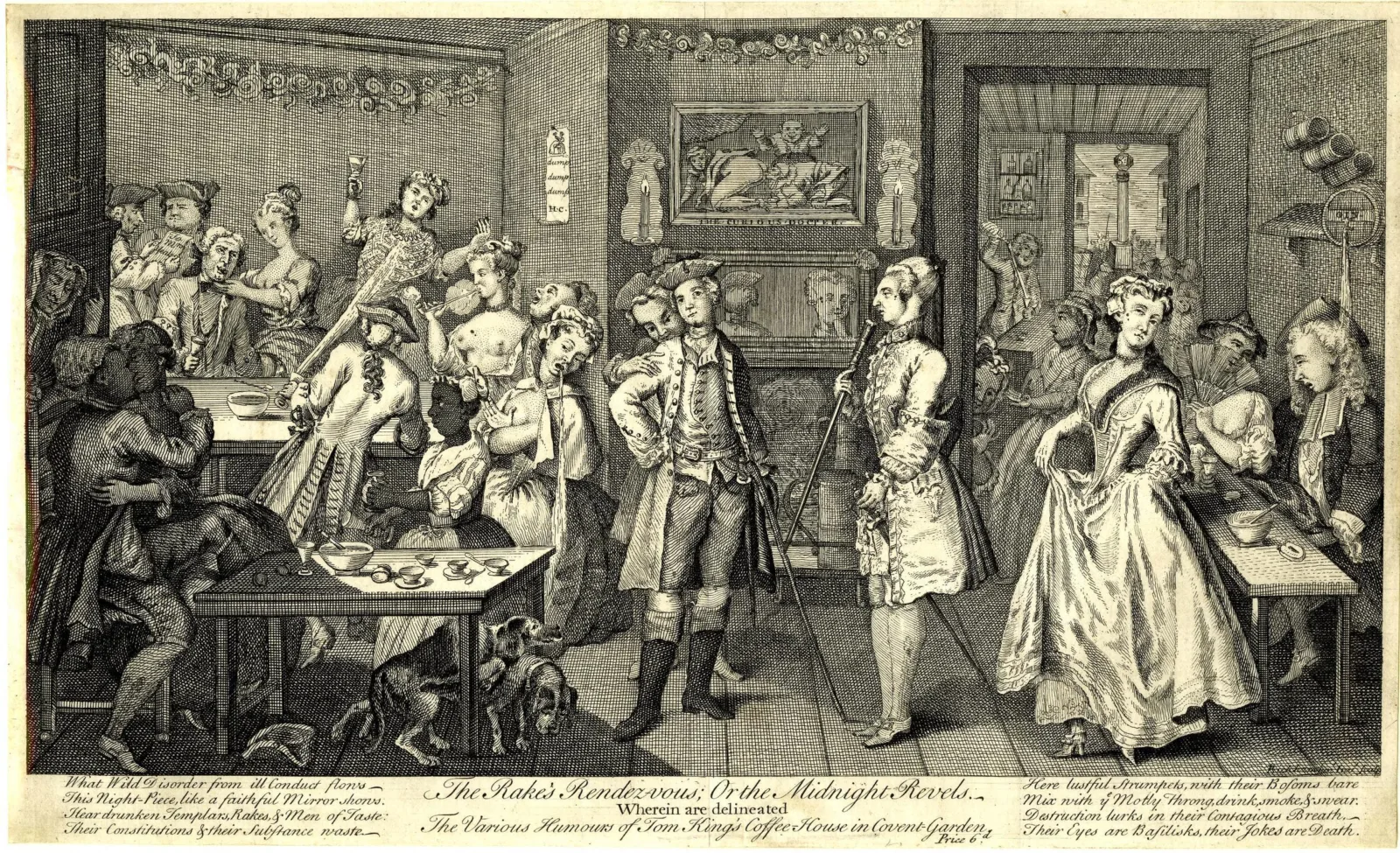
Description
This paper will describe and attempt to begin to remedy something that I’ve long sensed: namely, that eighteenth-century representational practices were more subtle and complex than our stock ways of talking about them often allow. I’m particularly interested in how fictionality, typicality, and reference to the so-called “real world” were frequently entangled with one another in a manner that defies most of our customary theories about those modes, but that didn’t apparently trouble many, if any, eighteenth-century readers or viewers. For the purposes of this paper, I will be focusing on just a handful of prints by William Hogarth (and some copies and imitations after them). But the phenomena we’ll be considering are hardly exclusive to his work or to visual material more generally. Indeed, once you start looking, they are legion and a perpetual reminder that the eighteenth century was not only smarter than we sometimes give it credit for, but often smarter than us.
About the Speaker
David A. Brewer teaches book history and the history of magic at The Ohio State University. He is the author or co-author of three books: The Afterlife of Character, 1726–1825 (University of Pennsylvania Press, 2005); Interacting with Print: Elements of Reading in the Era of Print Saturation (University of Chicago Press, 2018); and The Book in Britain: A Historical Introduction (Wiley-Blackwell, 2019). He has also done two Broadview editions: one of Richard Brinsley Sheridan’s The Rivals and George Colman the Elder’s Polly Honeycombe (2012) and one of Penelope Aubin’s The Life of Madam de Beaumount and The Life of Charlotta Du Pont (2023). He is currently completing a book, The Fate of Authors, on the centrality of authorial reputation to the operations of the eighteenth-century literary world. This paper is part of an ongoing project on the delightful complexities of fictionality, typicality, and reference. A different installment from it, “Rethinking Fictionality in the Eighteenth-Century Puppet Theatre,” won the James L. Clifford Prize from the American Society for Eighteenth-Century Studies in 2017.
Respondent
Heather Keenleyside, University of Chicago
About the Eighteenth-Century Studies Seminar Series
The Eighteenth-Century Seminar is designed to foster research and inquiry across the scholarly disciplines in eighteenth-century studies. It aims to provide a methodologically diverse forum for work that engages ongoing discussions and debates along this historical and critical terrain. Each year the seminar sponsors one public lecture followed by questions and discussion, and two works-in-progress sessions featuring pre-circulated papers.
Register
This event is free, but all participants must register in advance. Space is limited, so please do not request a paper unless you plan to attend.
Register and Request Paper