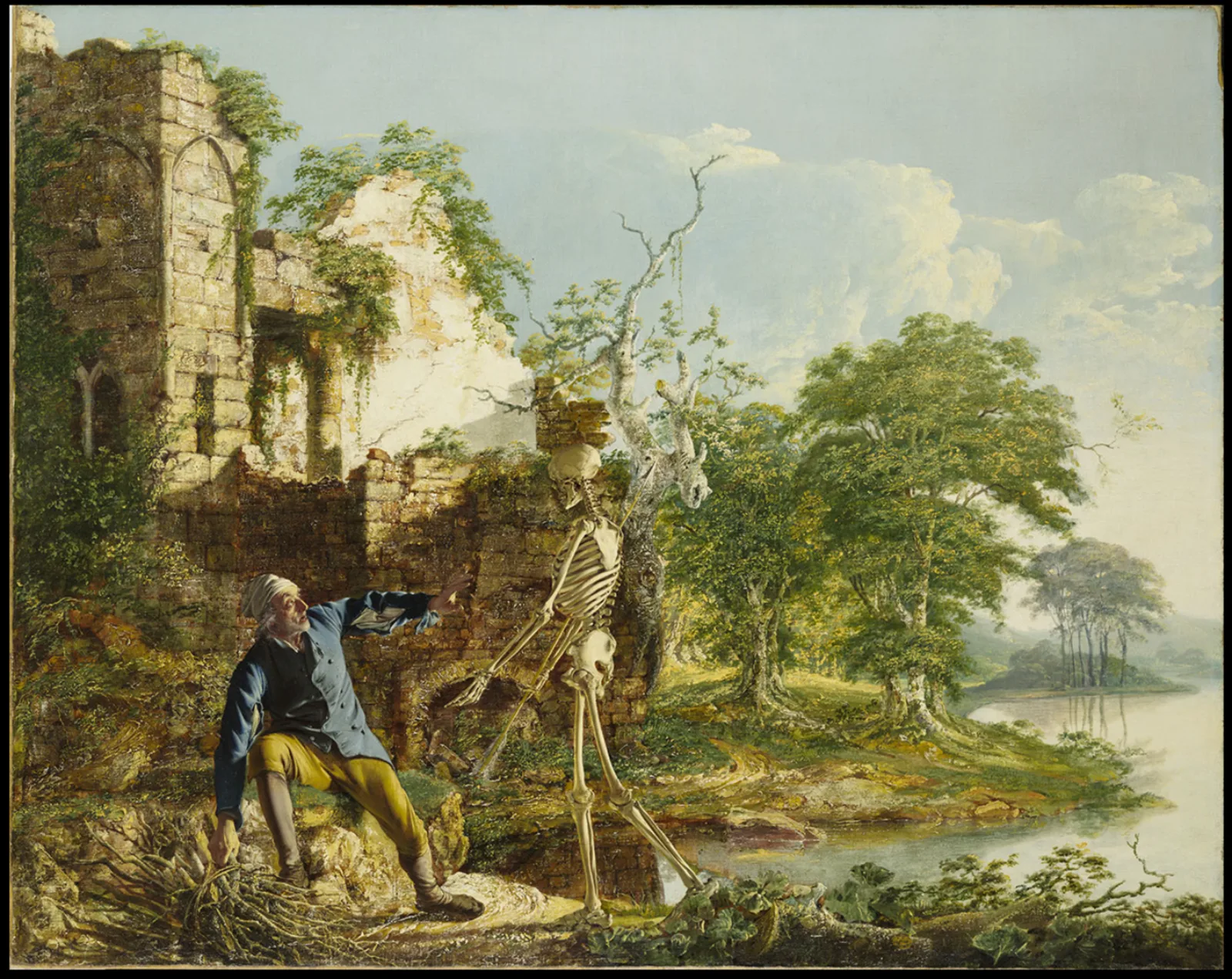
Description
In a recent monograph on Joseph Wright of Derby, Matthew Craske locates the artist in a genteel Midlands culture where he cultivated a melancholic temperament and a preference for seclusion. Craske describes Wright as a “painter of darkness” who sought to “stimulate sympathetic emotions” and produce a pleasurable discomfort in viewers through sublime contrasts of light and shade. Drawing on Craske’s insights, this talk raises metaphysical questions about Wright’s representation of life, death, and afterlife. Was it possible in Georgian England for painting to serve as "a catalyst of focused attention and a source of open-ended reflection”? That is how Thomas Pfau defines the metaphysical image, and we will consider just how fitting that phrase may be in relation to Wright. Were Wright’s paintings able, and were Georgian viewers willing, to grasp a radical alterity separate from oneself?
About the Speaker
Douglas Fordham is a historian of British art and the Chair of the Art Department at the University of Virginia. He co-edited Art and the British Empire (2007), which helped to place empire at the center of the study of British art. His first monograph, British Art and the Seven Years' War: Allegiance and Autonomy (2010) examined the relationship between imperial politics and artistic organization in eighteenth-century London. His second monograph, Aquatint Worlds: Travel, Print, and Empire (2019) considered how the newly discovered medium of aquatint printmaking conditioned the representation of cultures beyond Europe. Douglas is currently working on a book about metaphysics and Georgian painting.
About the Eighteenth-Century Studies Seminar Series
The Eighteenth-Century Seminar is designed to foster research and inquiry across the scholarly disciplines in eighteenth-century studies. It aims to provide a methodologically diverse forum for work that engages ongoing discussions and debates along this historical and critical terrain. Each year the seminar sponsors one public lecture followed by questions and discussion, and two works-in-progress sessions featuring pre-circulated papers.
Register
This event is free, but all participants must register in advance. Space is limited, so please do not request a paper unless you plan to attend.
Register and Request Paper