Description
This paper examines the surprisingly productive relationship between the Dutch and English colonies in North America in the early seventeenth century. The stricter Puritan colonies of New England expelled many people who then moved to the Dutch colony of New Netherland. Other Englishmen moved to New Netherland from English colonies in both North America and the Caribbean after different kinds of scandals, such as accusations of financial malfeasance. While the New England colonies were pleased to get rid of troublesome members, the paper answers the question of why New Netherland would want to welcome these refugees. It argues that New Netherland took in English outcasts not just because of Dutch belief in religious toleration, but also to serve as a territorial escape valve from the English colonies. Doing so provided a service to New England, and therefore protected New Netherland's existence. The government of New Netherland took action to encourage these practices and to encourage Anglo-Dutch coexistence on the Atlantic Coast. The paper shows that Anglo-Dutch imperial cooperation in this period stretched beyond explicitly transimperial ventures. It also shows the deep entanglement of religious, political, and imperial concerns in the early years of European expansion in the Americas.
About the Speaker
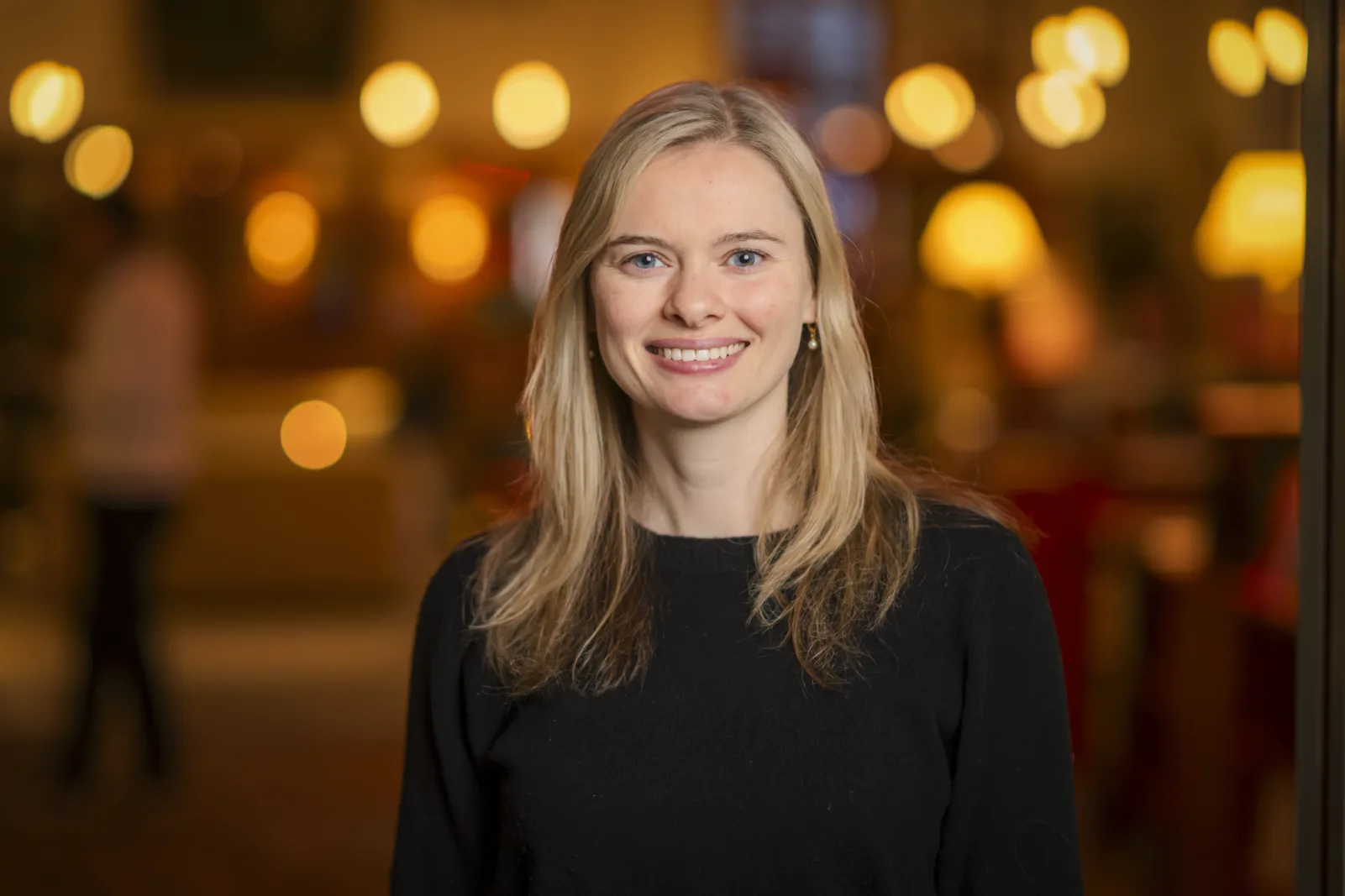
Elizabeth Hines is an Ax:son Johnson Institute for Statecraft and Diplomacy Postdoctoral Fellow at Johns Hopkins University. She received a PhD in history from the University of Chicago in 2024. Her research has been supported by institutions including the Omohundro Institute, the New England Regional Fellowship Consortium, and the New Netherland Institute, and she has held fellowships at the New York Public Library, the British Library, and the Huntington Library. Her work is forthcoming in Diplomatica and the Journal of Early Modern History.
Commentator
Christian Koot, Towson University
About the Religion and Culture in the Americas Seminar Series
The Religion and Culture in the Americas Seminar explores topics in religion and culture including social history, biography, cultural studies, visual and material culture, urban studies, and the history of ideas. We are interested in how religious belief has affected society, rather than creedal or theological focused studies. Seminars are conversational and free and open to faculty, graduate students, and members of the public, who register in advance to request papers.
Registration
This event is free, but all participants must register in advance and space is limited. To register and request a copy of the pre-circulated paper, click below. Please do not request a paper unless you plan to attend.
Register and Request Paper