Description
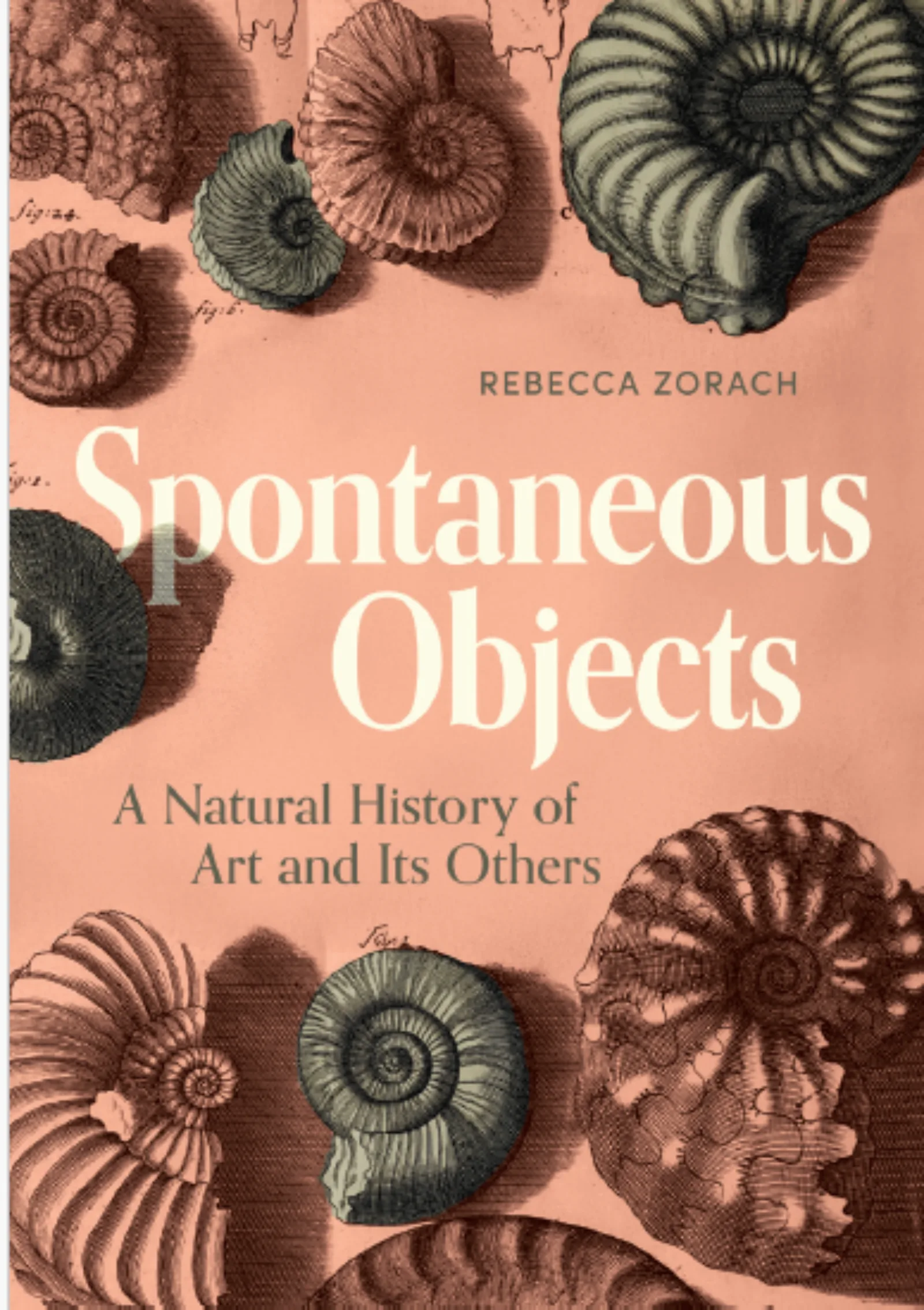
How was Nature understood before 1800, and how does that understanding impact our relationship with nature today? In this virtual conversation, Dr. Monica Azzolini (University of Bologna) and Dr. Stephen Campbell (Johns Hopkins University) join Dr. Rebecca Zorach (Northwestern University) to discuss these and other questions from her new book, Spontaneous Objects: A Natural History of Art and Its Others (Penn State University Press, 2026), which features research that Zorach shared in a variety of CRS programming, including two graduate courses— Thinking with Stones (2015-2016) and Exposed to the Elements (2019-2020)—as well as the symposium Elemental Forces (2021).
In the late medieval and early modern periods, European artists, theorists, and natural philosophers imagined Nature not simply as a force of reproduction but as an artist in its own right—a creative power capable of generating images, artifacts, and objects of beauty. Tracing this idea from the fifteenth through early nineteenth centuries, Rebecca Zorach challenges assumptions about human artistic genius and intention that have long dominated histories of art and science.
With inspiration from new materialist theory, Zorach reclaims a largely disregarded undercurrent of historical thought about the powers of nature. Through case studies ranging from Renaissance centaurs and snails to Adam Smith’s beaver hat and Kant’s travelers’ tales, Zorach investigates how ideas about nature’s generative power unsettled conventional definitions of image, artifact, and artistic intention. At the same time, Zorach also confronts the violent legacies of a different vision of nature’s power: as European empires expanded, emerging natural philosophies contributed to global colonial imaginaries and racial hierarchies, reframing nature as a force to be classified, controlled, and exploited. In seeking to understand whether and how these views of nature cohere, Zorach excavates how the historical formation of the “human” and the “natural” depends on ideas about artistic production and artistic intention.
If you are interested in purchasing a copy of the book, take 30% off with code NR26 when you order through psupress.org.
Zoom Access
To access this program, click on the Zoom link below. If necessary, the meeting ID is 881 1798 6379, and the passcode is 435384.
Learn More