Scroll down for Spanish / Desplázate hacia abajo para español
In 1968, the Black Panthers established an Illinois chapter on the West Side of Chicago. The Black Panthers were a revolutionary organization that combined opposition to racism and police brutality with community programs such as free breakfasts and health clinics. The chapter quickly came under the leadership of the charismatic Fred Hampton, a young civil rights organizer known for his powerful speaking ability, who became one of the city’s most prominent Black activists. Around the same time, the Young Lords, a primarily Puerto Rican group that had formed initially as a street gang in Chicago’s Lincoln Park neighborhood, rededicated itself under José "Cha Cha" Jiménez to becoming a political and human rights organization.
The Young Lords made the news for occupying Chicago’s 18th District Police Station, to protest police violence. After reading this news, Hampton sought out Jiménez. The two met and formed the Rainbow Coalition, a multiracial alliance of working-class organizations united around issues of housing, poverty, police brutality, and racial and economic inequality. The term soon became a rallying cry for cross-race class struggle.
Bob Lee, a Black Panther Party organizer and former Student Nonviolent Coordinating Committee (SNCC) activist who became instrumental in building the coalition, helped create an alliance with the Young Patriots Organization. A group of poor and working-class white Southerners and Appalachian migrants living primarily in Chicago’s Uptown neighborhood, the Young Patriots referred to themselves as “dislocated hillbillies” and had formed largely to address such issues as poor housing conditions and welfare programs. They had been inspired by the Civil Rights movement and admired the Black Panther Party. Crucially, they envisioned a solidarity focused on class instead of race.
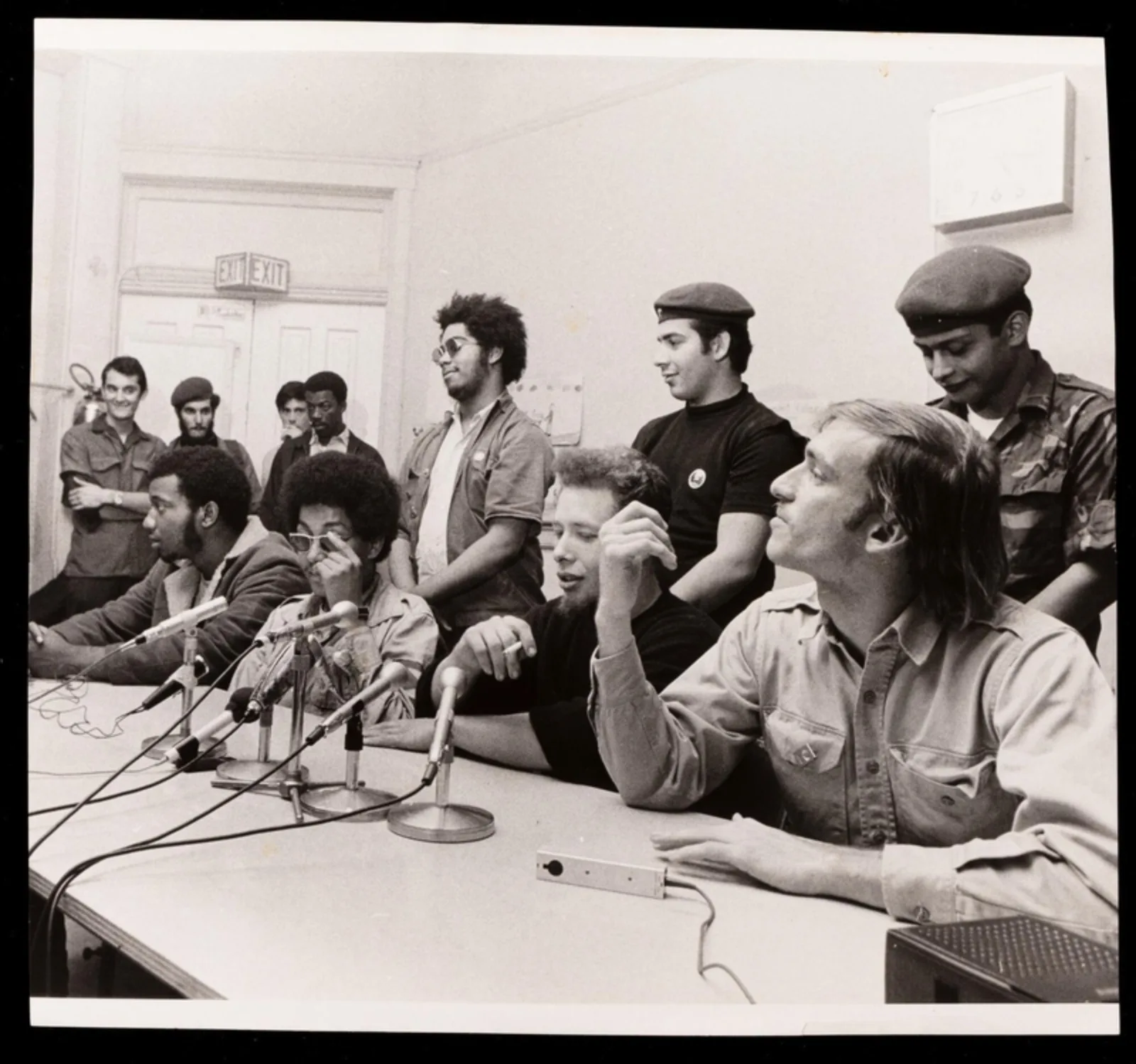
After establishing alliances among these groups, the Rainbow Coalition partnership officially formed in 1969. Hampton represented the Black Panther Party, Jiménez the Young Lords Organization, and William “Preacherman” Fesperman of the Young Patriots rounded out the initial coalition leaders.
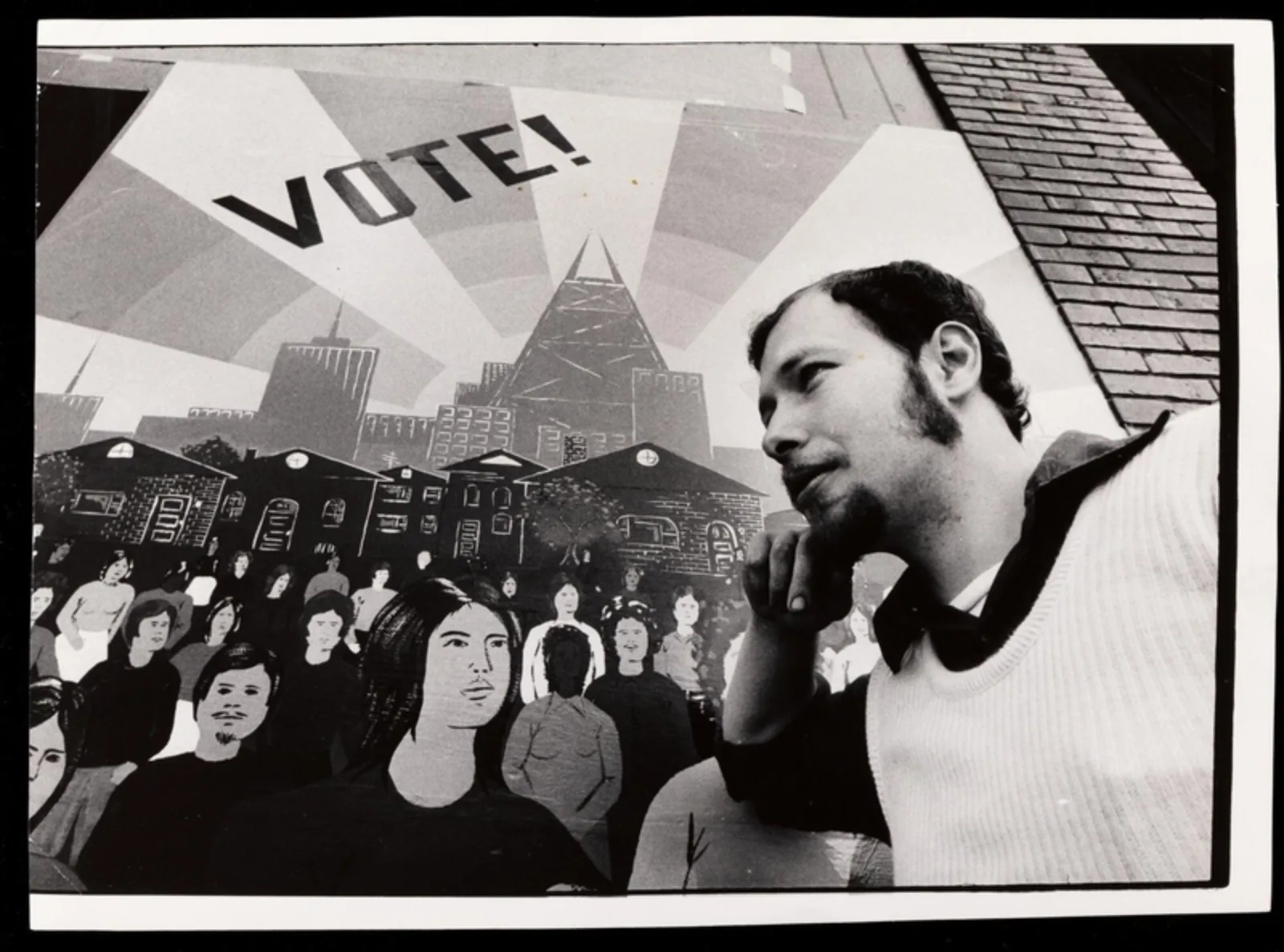
The group quickly got to work, joining with other civil rights organizations to address issues like poverty, poor housing conditions, police brutality, and more. They supported each other at protests and strikes, collaborated to improve public education, and promoted class solidarity across racial lines. Local religious organizations anchored the coalition by offering safe meeting spaces, logistical assistance, and volunteers for their new programs. The Northside Cooperative Ministry stood as a close ally, while Pastor Bruce Johnson of Armitage Avenue Methodist Church—known colloquially as La Iglesia de la Gente, or “The People’s Church”—supplied vital organizing space. The network launched community programs like food pantries, and the Young Patriots successfully established a free health clinic. Additionally, the coalition promoted civic education, encouraging Chicagoans to get out and take action.
Religious organizations also played an important role in the coalition’s development. Churches and clergy provided meeting spaces, organizational support, and connections to neighborhood communities. In Lincoln Park, the Northside Cooperative Ministry, a network of clergy working with poor and working-class residents supported the Young Lords and other community organizers, while Rev. Bruce Johnson of Armitage Avenue Methodist Church welcomed the Young Lords into the church, which they soon transformed into the People’s Church and used for community programs. Earlier, a meeting at the Church of the Three Crosses brought Black Panther organizer Bob Lee and members of the Young Patriots together to discuss poverty and organizing across racial lines, helping lay groundwork for the Rainbow Coalition. These relationships illustrate how some Chicago religious institutions served as spaces where activists built alliances and organized for social change.
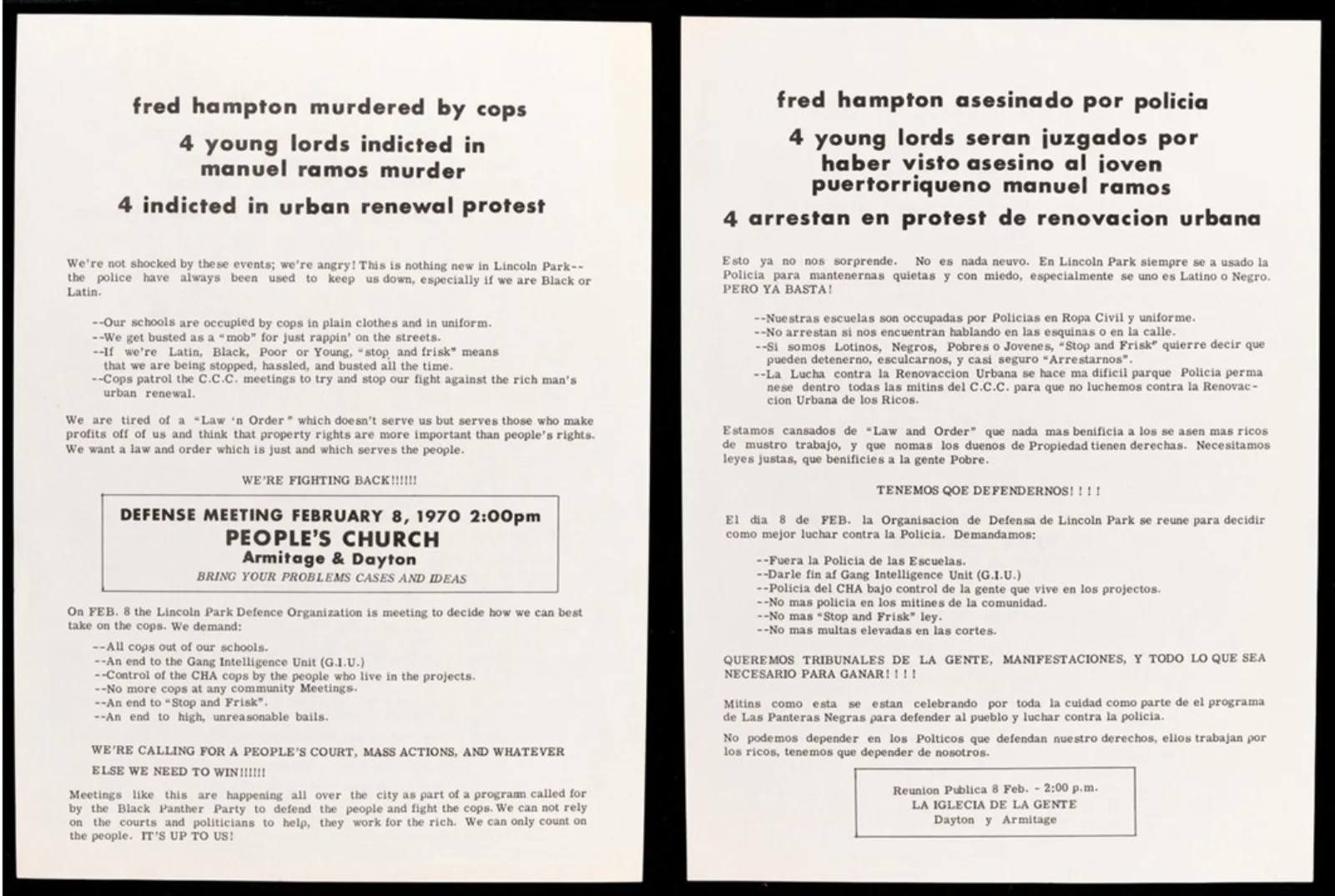
The coalition faced intense pressure from the FBI, with the attention of its Counter Intelligence Program (COINTELPRO) focused on Fred Hampton and the Black Panther party. Authorities considered Hampton dangerous due to his ability to form cross-racial coalitions, as demonstrated by the success of the Rainbow Coalition. On December 4, 1969, Fred Hampton was assassinated by the local police, with the support of the FBI. This event proved a catalyst for intensified suppression of the Rainbow Coalition’s groups and initiatives by local police departments.
The ideals championed by the Rainbow Coalition fueled later pushes for civil rights. In 1984, the Reverend Jesse Jackson adopted the term when forming his own national coalition, a legacy later invoked by other political figures, most recently Barack Obama. The dream forged by these local Chicago groups, who formed unlikely alliances across racial boundaries and—vitally—mobilized faith communities, has generated profound consequences for social change movements, not only in Chicago, but across the country.
Further Reading
At the Newberry, view buttons, fliers, and press photographs related to the activities of the Rainbow Coalition during the late 1960s and early 1970s in our Rainbow Coalition Collection. For digitized versions of print material in the collection, go to collections.newberry.org and search for Midwest MS Rainbow.
Find more information on the original Rainbow Coalition in the books From the Bullet to the Ballot by Jakobi Williams, Hillbilly Nationalists, Urban Race Rebels, and Black Power by Amy Sonnie and Tracy James, and It Is Not Enough to Survive by Jesse Montgomery.
Chase Viscuse is a master's degree student at the University of Chicago Divinity School and a Martin Marty Center Summer Intern for the Beyond Belief initiative.
Español
En 1968, los Panteras Negras fundaron una sección de Illinois en el lado oeste de Chicago. Los Panteras Negras eran una organización revolucionaria que integraba la lucha contra el racismo y la violencia policial con programas comunitarios como desayunos gratis y clínicas de salud. La sección pronto quedó bajo el liderazgo del carismático Fred Hampton, un joven activista de derechos civiles conocido por su gran talento para hablar en público, quien se convirtió en uno de los activistas negros más destacados de la ciudad. Por esa misma época, los Young Lords, un grupo principalmente puertorriqueño que se había formado inicialmente como una pandilla callejera en el barrio de Lincoln Park de Chicago, se reorientó bajo el liderazgo de José “Cha Cha” Jiménez para convertirse en una organización política y de derechos humanos.
Los Young Lords saltaron a los titulares por ocupar la estación de policía del Distrito 18 de Chicago, en protesta contra la violencia policial. Al leer esta noticia, Hampton buscó a Jiménez. Los dos se reunieron y formaron la Coalición Arcoíris (Rainbow Coalition en inglés), una alianza multirracial de organizaciones de clase trabajadora unidas en torno a temas como la vivienda, la pobreza, la brutalidad policial y la desigualdad racial y económica. El término pronto se convirtió en un grito de guerra para la lucha de clases interracial.
Bob Lee, un organizador del Partido Pantera Negra y exactivista del Comité Coordinador Estudiantil No Violento (Student Nonviolent Coordinating Committee; SNCC, por sus siglas en inglés), quien fue clave en la formación de la coalición, ayudó a crear una alianza con la Young Patriots Organization (Organización de Jóvenes Patriotas). Los Young Patriots, un grupo de sureños blancos de bajos recursos y de la clase obrera, además de migrantes de los Apalaches que vivían principalmente en el barrio de Uptown de Chicago, se autodenominaban “montañeses desplazados” y se habían integrado principalmente para abordar temas como las malas condiciones de vivienda y los programas de asistencia social. Se habían inspirado en el movimiento por los derechos civiles y admiraban al Partido Pantera Negra. Lo más importante es que imaginaban una solidaridad centrada en la clase en lugar de en la raza.
Tras establecer alianzas entre estos grupos, la Coalición Arcoíris se formó oficialmente en 1969. Hampton representaba al Partido Pantera Negra, Jiménez a la Organización de los Young Lords, y William “Preacherman” (El Predicador) Fesperman, de los Young Patriots, completaba el grupo inicial de líderes de la coalición.
El grupo se puso rápidamente a trabajar, uniendo fuerzas con otras organizaciones de derechos civiles para abordar temas como la pobreza, las malas condiciones de vivienda, la brutalidad policial y más. Se apoyaban mutuamente en las protestas y huelgas, colaboraban para mejorar la educación pública y promovían la solidaridad de clase más allá de las barreras raciales. Las organizaciones religiosas locales fueron el pilar de la coalición, ofreciendo espacios seguros para reunirse, apoyo logístico y voluntarios para sus nuevos programas. El Northside Cooperative Ministry fue un aliado cercano, mientras que el pastor Bruce Johnson de la Iglesia Metodista de Armitage Avenue —conocida coloquialmente como La Iglesia del Pueblo— proporcionó un espacio vital para la organización. La red lanzó programas comunitarios como bancos de alimentos, y los Young Patriots lograron establecer una clínica de salud gratuita. Además, la coalición promovió la educación cívica, animando a los habitantes de Chicago a involucrarse y tomar acción.
Las organizaciones religiosas también jugaron un papel importante en el desarrollo de la coalición. Las iglesias y el clero proporcionaron espacios de reunión, apoyo organizativo y conexiones con las comunidades del vecindario. En Lincoln Park, la Northside Cooperative Ministry, una red de clérigos que trabajaba con residentes de bajos recursos y de la clase obrera, apoyó a los Young Lords y a otros organizadores comunitarios, mientras que el reverendo Bruce Johnson, de la Iglesia Metodista de la Avenida Armitage, acogió a los Young Lords en la iglesia, que pronto empezó a llamarse la Iglesia del Pueblo y sirvió de sede para programas comunitarios. Estos esfuerzos fueron precedidos por un encuentro en la en la Iglesia de las Tres Cruces (Church of the Three Crosses) donde Bob Lee, organizador de los Panteras Negras y miembros de los Young Patriots se reunieron para hablar sobre la pobreza y la organización más allá de las divisiones raciales, lo que ayudó a sentar las bases para la Coalición Arcoíris. Estas relaciones muestran cómo algunas instituciones religiosas de Chicago sirvieron como espacios donde los activistas forjaron alianzas y se organizaron para lograr un cambio social.
La coalición enfrentó una intensa presión por parte del FBI, cuya atención, a través de su Programa de Contrainteligencia (COINTELPRO), se centró en Fred Hampton y el Partido Pantera Negra. Las autoridades consideraban a Hampton peligroso debido a su capacidad para forjar coaliciones interraciales, como lo demostró el éxito de la Coalición Arcoíris. El 4 de diciembre de 1969, Fred Hampton fue asesinado por la policía local, con el apoyo del FBI. Este suceso fue el catalizador de una represión cada vez más intensa contra los grupos e iniciativas de la Coalición Arcoíris por parte de los departamentos de policía locales.
Los ideales que defendía la Coalición Arcoíris impulsaron luchas posteriores por los derechos civiles. En 1984, el reverendo Jesse Jackson retomó el nombre al formar su propia coalición nacional, un legado al que más tarde apelaron otras figuras políticas, entre ellas, más recientemente, Barack Obama. El sueño forjado por estos grupos locales de Chicago, que formaron alianzas inesperadas más allá de las barreras raciales y —lo que es fundamental— movilizaron a las comunidades religiosas, ha tenido profundas repercusiones en los movimientos de cambio social, no solo en Chicago, sino en todo el país.
Información y lecturas adicionales
En la Newberry, puedes ver botones, volantes y fotos de prensa relacionadas con las actividades de la Coalición Arcoíris a finales de la década de 1960 y principios de la de 1970 en nuestra Colección de la Coalición Arcoíris. Para ver versiones digitalizadas del material impreso de la colección, ve a collections.newberry.org y busca “Midwest MS Rainbow”.
Encuentra más información sobre la Coalición Arcoíris original en los libros From the Bullet to the Ballot (De la bala al voto), de Jakobi Williams; Hillbilly Nationalists, Urban Race Rebels, and Black Power (Nacionalistas hillbillies, rebeldes raciales urbanos y Poder Negro) de Amy Sonnie y Tracy James; y It Is Not Enough to Survive (No basta con sobrevivir), de Jesse Montgomery.
Chase Viscuse es estudiante de maestría en la Escuela de Teología de la Universidad de Chicago y pasante de verano de 2026 en el Centro Martin Marty para la iniciativa Más allá de la fe.