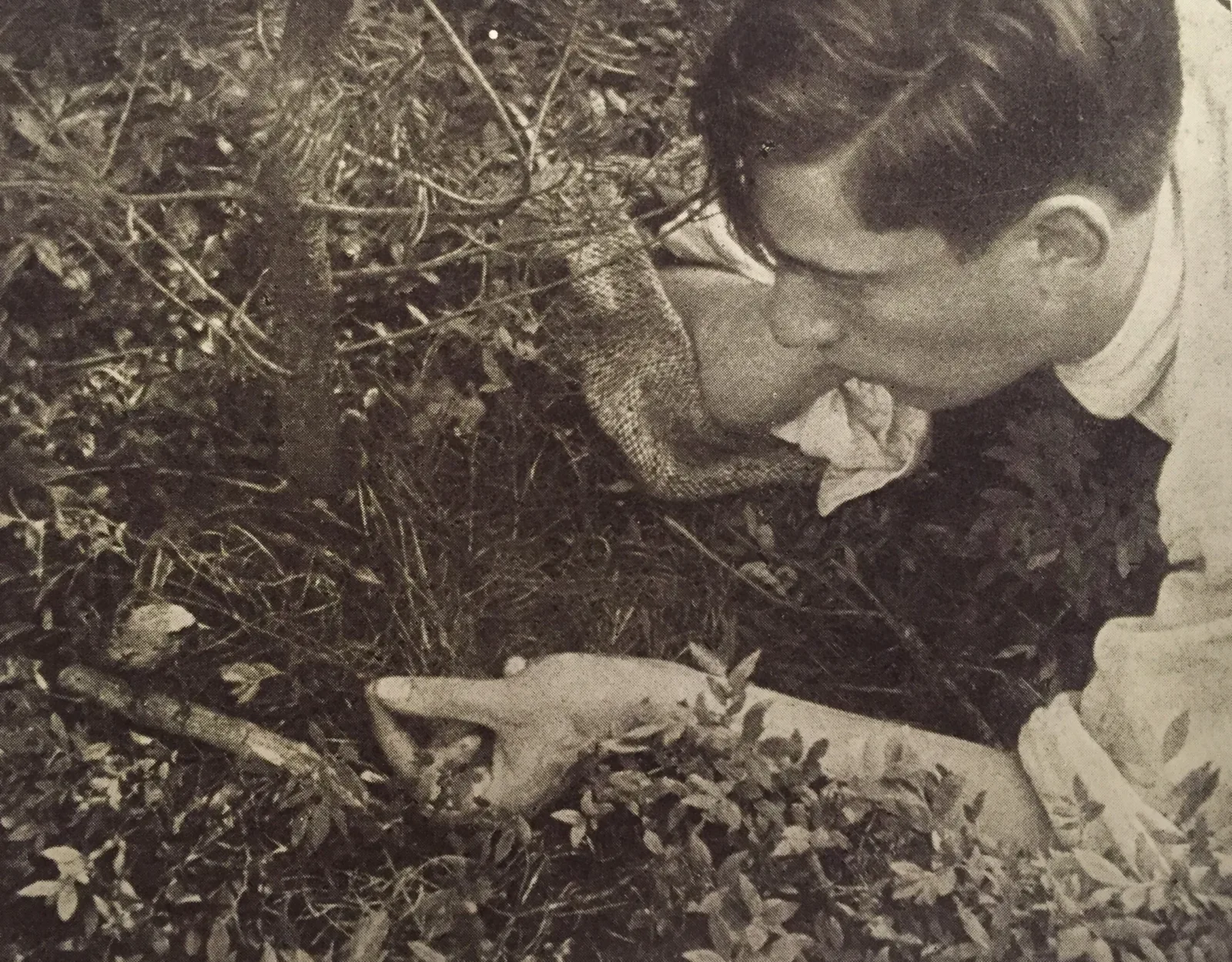
The story of Nathan Leopold has intrigued people for decades, with at least 19 non-fiction books and 190 fictional works based on his life. Born into a wealthy Chicago Jewish family, he had broad interests in such topics as language (he studied fifteen), philosophy, medicine, law, and ornithology. But it was his collaboration with Richard Loeb in the murder of fourteen-year-old Bobby Franks in 1924 that etched his profile in popular culture.
Leopold was born in 1904, the youngest of three children. He was frail as a child and spent much time on his own. The family had a home in the Kenwood neighborhood on the south side, as well as a summer residence in Highland Park. During his explorations of these locations, he developed an interest in insects. To encourage his son’s pursuit in natural history, Leopold’s father introduced him to Henry Coale, who had one of the largest private bird collections in the country. Leopold was five years old at the time, and his passion for birds acquired that day never subsided.
Leopold’s major ornithological achievement is probably the work he did with Kirtland’s warblers, then a poorly known species restricted to about ten counties in the northern portion of Michigan’s lower peninsula. He discovered that one reason the bird was so rare is because its nests are heavily parasitized by brown-headed cowbirds, a native species that lays its eggs in the nests of other birds. Control of cowbird numbers and increasing the limited habitat it requires enabled the warbler to expand its population and range.
Leopold and Loeb had encountered each other on occasion but became friends after high school in 1920. They held several things in common including their ethnicity, wealth, and academic proficiency. A short while later, their relationship became physical as well. Loeb shared his long-time interest in petty crimes and the two also began collaborating in this realm. Loeb wanted to execute a crime higher in profile than anything he had committed in the past. The two young men came up with the idea of kidnapping and murdering a victim with affluent parents who could pay the ransom they would request. This was going to be the perfect crime.
They considered a number of potential victims, including family members, but in the end, they played that element by ear. On May 21, 1924, the two rented a car and began cruising the blocks around the Harvard School for Boys, the college preparatory school that Leopold had attended. Fourteen-year-old Bobby Franks had just finished umpiring a baseball game and was walking the short distance home. When they spotted him, Loeb and Leopold stopped their car and lured Franks inside with a question about tennis, a game Loeb and he both played. Who was sitting where has been a question, but likely it was Loeb who pummeled the doomed passenger’s head and then pulled him into the backseat where he suffocated Franks by inserting a rag into his mouth.
The two drove around a bit and then proceeded to Hyde Lake on Chicago’s southeast side, an area Leopold knew well from his birding. It is separated from the larger Wolf Lake by a railroad embankment. Leopold took off his coat and donned hip boots so he could lodge Franks’ body in a culvert that connected the two lakes. On their way home, they called the Franks’ informing them that their son had been kidnapped but was physically fine. They needed to wait until they received more detailed instructions on how to proceed. The next day those details arrived at the Franks’ home, and the demand was made that $10,000 in worn bills had to be conveyed in a specified way to ensure the safe return of Bobby.
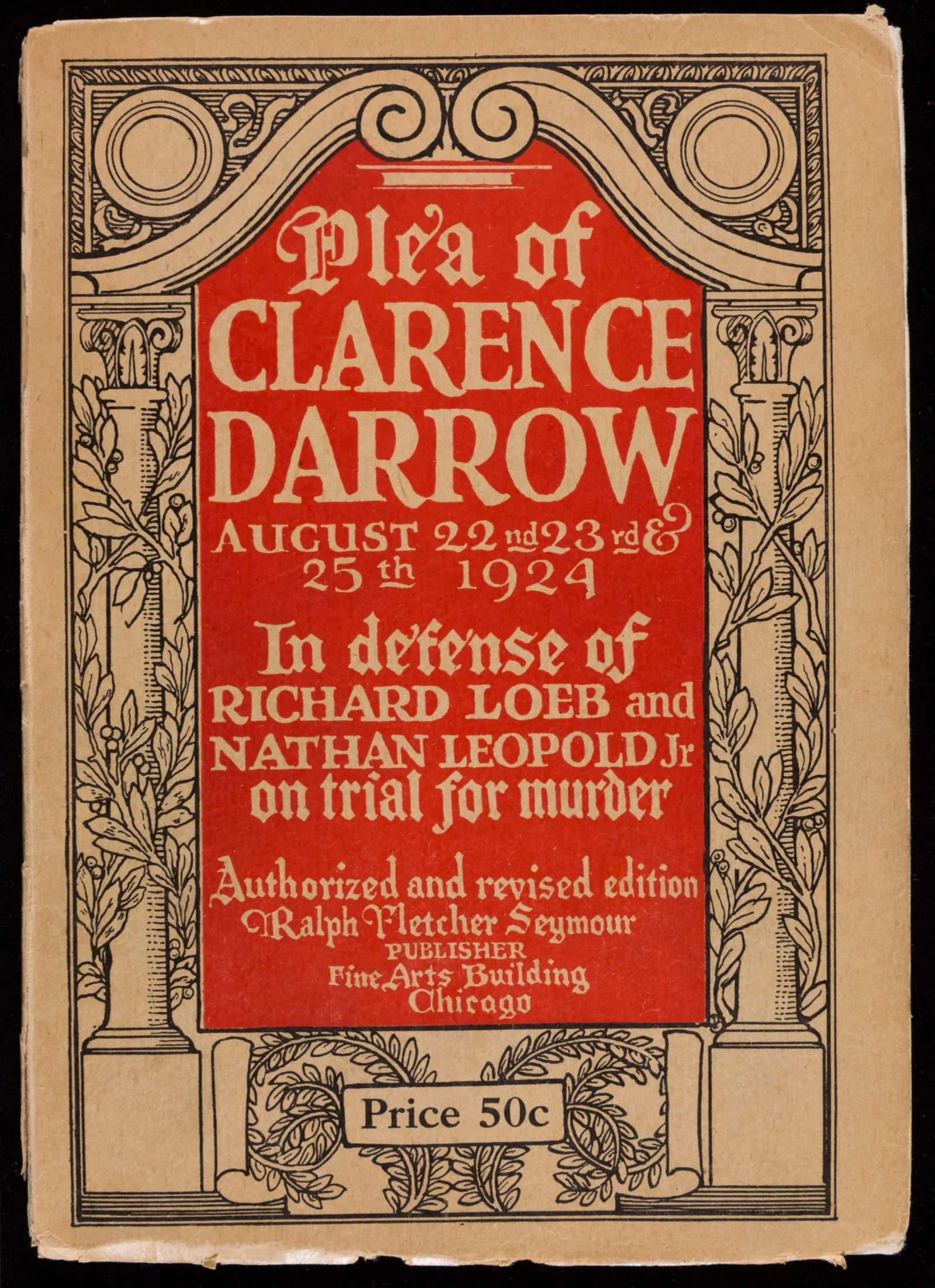
That same day, railroad workers discovered the boy’s body and Leopold’s eyeglasses that had fallen out of his coat pocket. Leopold’s name first came to the attention of police when it appeared on a list of visitors to a nearby forest preserve. But the glasses had an innovative hinge that company records indicated had been sold to only three people, one of whom was Leopold. After lengthy interrogations, Leopold and Loeb each confessed to the crime and were indicted for murder. The families succeeded in getting Clarence Darrow to represent the two defendants. Darrow had them plead guilty, so what was called the trial of the century by some was actually a sentencing hearing. The expectation was that both Leopold and Loeb would receive the death penalty, but the judge spared their lives, sentencing them to life in prison for the murder and ninety-nine years for the kidnapping. In issuing his decision, the judge emphasized the youth of the defendants.
Loeb was murdered by another prisoner in 1936. Leopold stayed at the Stateville Correctional Center in Will County until he was paroled in 1958. A major player in helping secure Leopold’s freedom was the Elgin, Illinois based Church of the Brethren which operated a hospital in Puerto Rico. Leopold was to spend most of the remainder of his life on the island. He also received a master’s degree in social work and continued his bird studies, which culminated in his book Birds of Puerto Rico and the Virgin Islands published in 1963. At a Passover seder in San Juan, a rabbi introduced Leopold to Trudi Feldman, and the two wed in 1961.
After several years of struggling with the effects of diabetes and heart disease, Leopold died on August 29, 1971. There was no funeral and he left his organs to the local medical school and eye bank. As Leopold’s attorney and confidant Elmer Gertz put it, “His life will be studied for what it can teach us about the good and bad possibilities of human beings. He was a puzzle even to those like me who knew him best.”
About the Author
Joel Greenberg is the author (with Judith Winston) of To Life: Jews Exploring Nature, Rutgers University Press, 2026, offering a unique examination of the Jewish relationship with nature through eight chapter-long biographies illuminating significant Jewish thinkers who increased understanding of the natural world. Four of the subjects had strong ties to Chicago and include botanist and spy Aaron Aaronsohn, zoologist Libbie Henrietta Hyman (University of Chicago), infamous ornithologist Nathan Leopold, mammalogist Philip Hershkovitz (Field Museum), arachnologist Herbert Levi, herpetologist Hymen Marx (Field Museum), public health entomologist Andrew Spielman, and ecologist Joan Ehrenfeld. Joel has written numerous articles and has authored or coauthored four books, including A Natural History of the Chicago Region and A Feathered River Across the Sky: The Passenger Pigeon’s Flight to Extinction.