There are 1.6 million books and over a thousand manuscript collections in the Newberry's Stacks Building. Some of our books have never been requested due to their obscurity or narrow subject focus, but some items have a reputation that spans the globe and causes scholars and enthusiasts to travel to Chicago to interact with them. This post explores the top five most requested items in 2025 and what makes them so special!
Explore the 5 Most-Requested Collection Items of 2024#5. Codex Zempoala, 1720
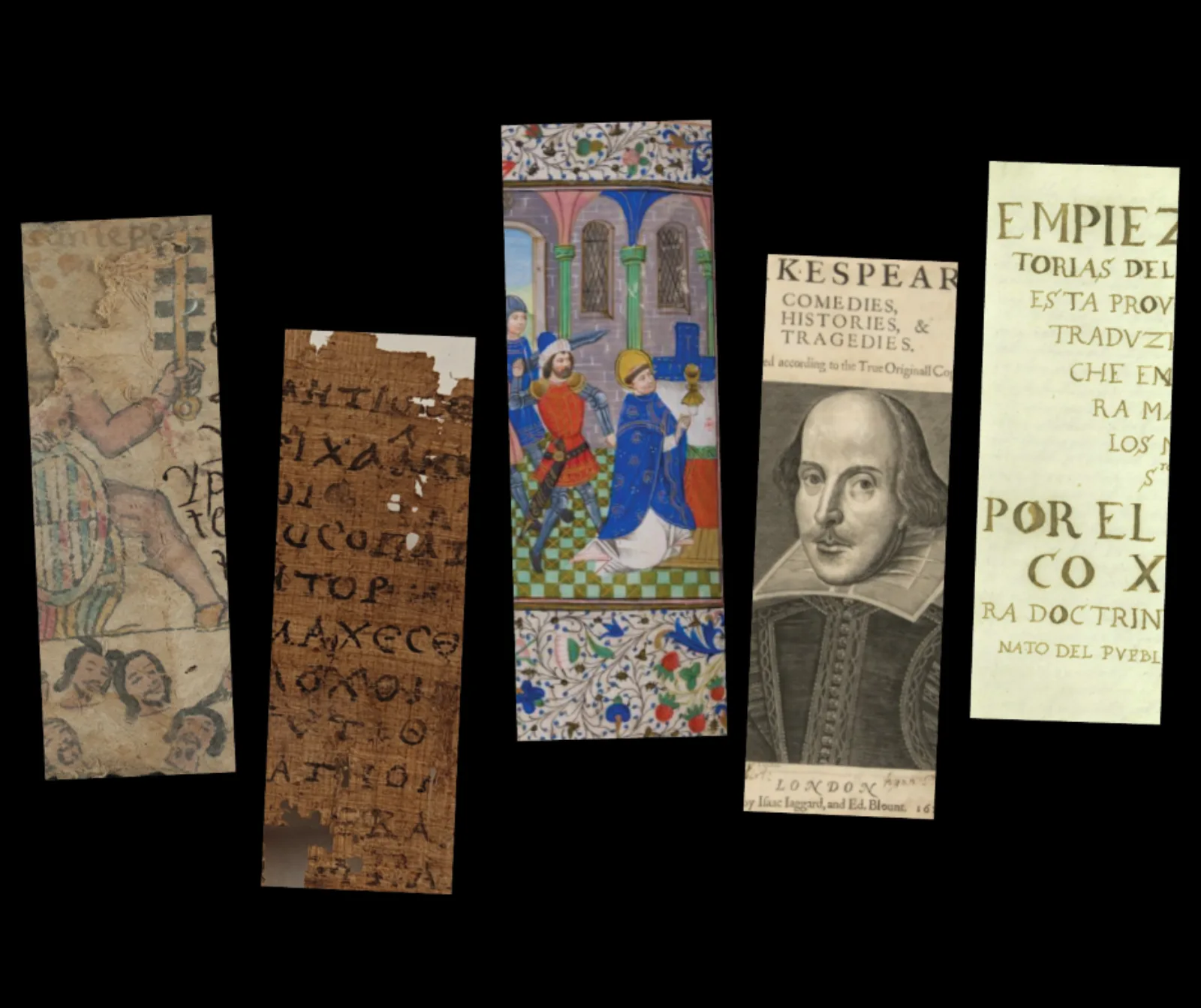
The fifth most-requested collection item is the “Codex Zempoala,” an early eighteenth-century document aimed to safeguard and conserve the rights and lifeways of Indigenous people in the central Mexican village of Zempoala.
The Nahua people used this document to demonstrate their long-standing relationship with the land in an attempt to prove their land rights. Made of Indigenous amatl (fig bark) paper, the Codex Zempoala is referred to as a Techialoyan codex or “village land book.” During the 2025 Nebenzahl Lectures in the History of Cartography, the Newberry hosted a papel amate workshop where visitors were able to learn the history and craft behind this Indigenous paper!
View Catalog Record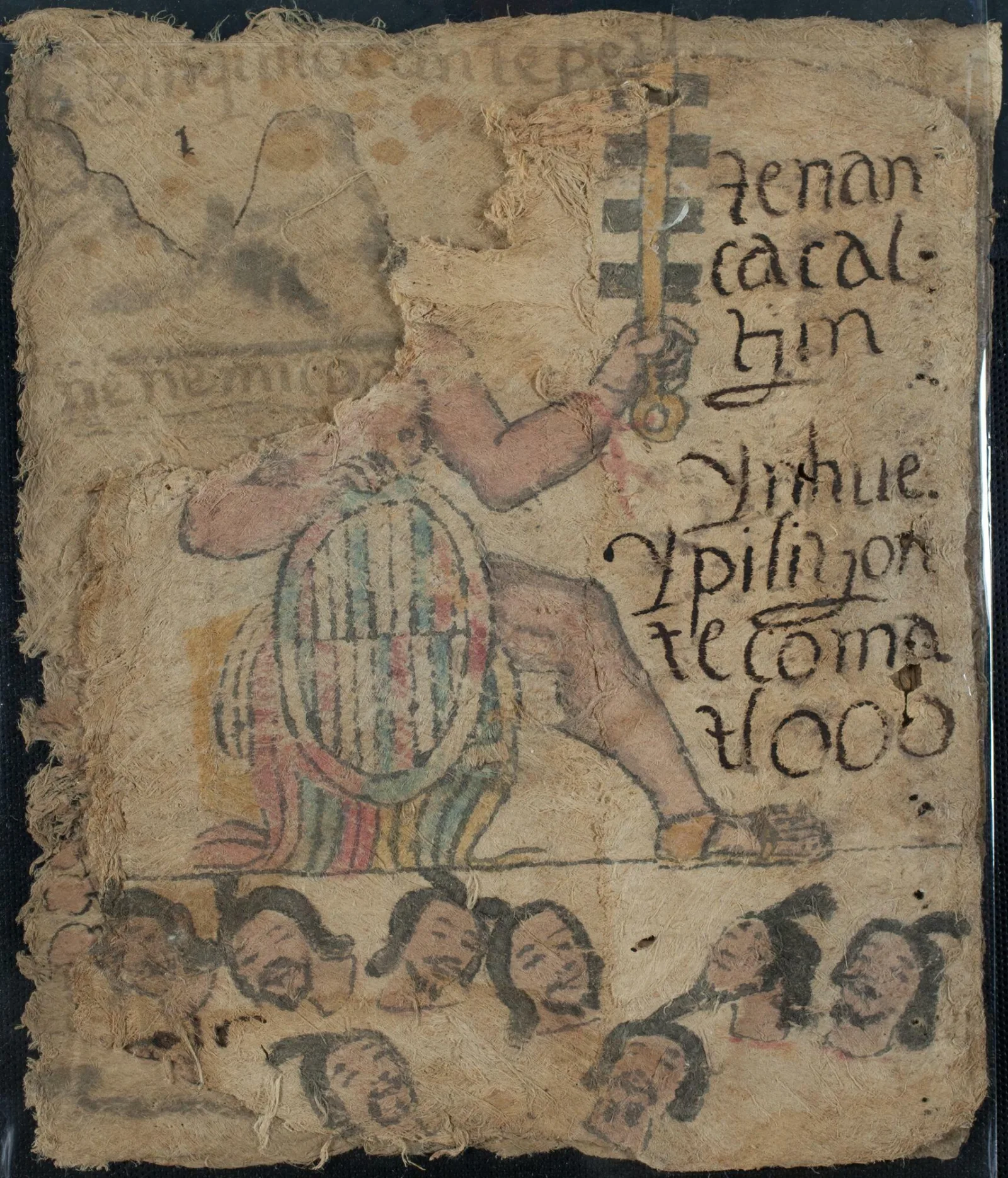
#4. Papyrus Fragment the Iliad, 1-99
Greek MS 1, or its nondescript catalog title “papyrus fragment,” is actually a partial piece of papyrus scroll that contains lines 567-581 of the twenty-first book of Homer’s Iliad. It is thought to be one of the oldest items in the Newberry’s collection with scholars placing its creation date between 1 and 99AD. A set of cuneiform tablets may be older, but like this fragment, it has been difficult to definitively date them.
The fragment is from a scroll likely created in Fayyūm, Egypt. It is written in Greek uncial hand (a majuscule script with rounded, unjoined letters, which is found in early manuscripts and from which modern capital letters are derived) and features several annotations on its verso which were likely added much later.
View Catalog Record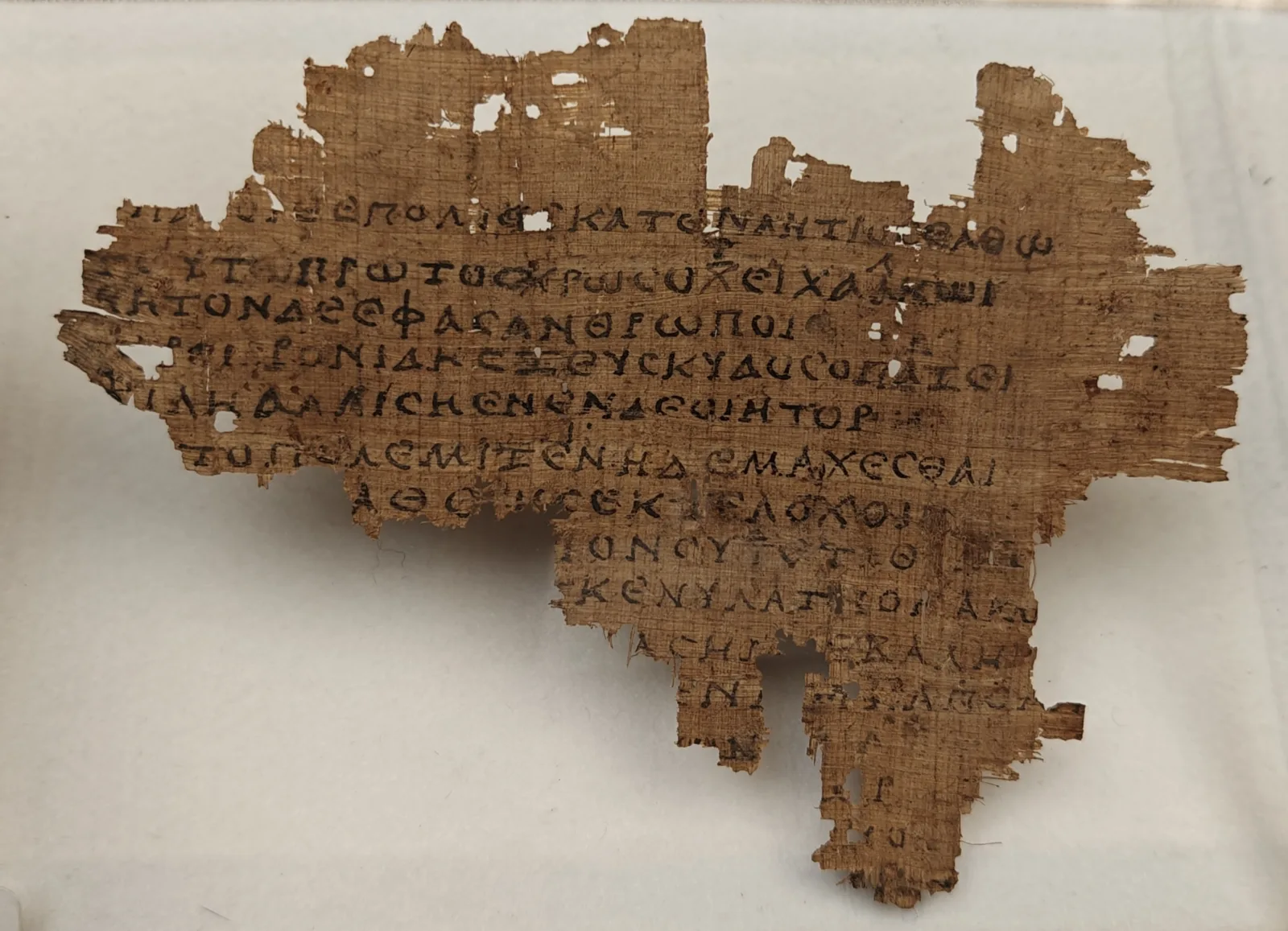
#3. Book of Hours, Use of Salisbury, 1455
The third most requested collection item is the “Book of Hours, Use of Salisbury.” Illustrated for a wealthy patron in the Netherlands, it was kept and used in Salisbury, England, for centuries. Books of Hours are Christian prayer books, which were used to pray the canonical hours. They were popular in the Middle Ages and were created to help lay people who wished to incorporate elements of monasticism into their devotional life.
This manuscript is a largely standard edition; however, it becomes notable because of the changes made to it in the course of the book’s long life. In 1538, King Henry VIII decreed that all shrines and texts mentioning St. Thomas Becket should be destroyed due to the saint’s opposition to a prior English King Henry. The owner of this particular manuscript certainly knew of the king’s order, but instead of tearing out the pages or blacking out the text, he simply crossed out the text while preserving the adjacent image both of which are shown below.
#2. Shakespeare's First Folio, 1623
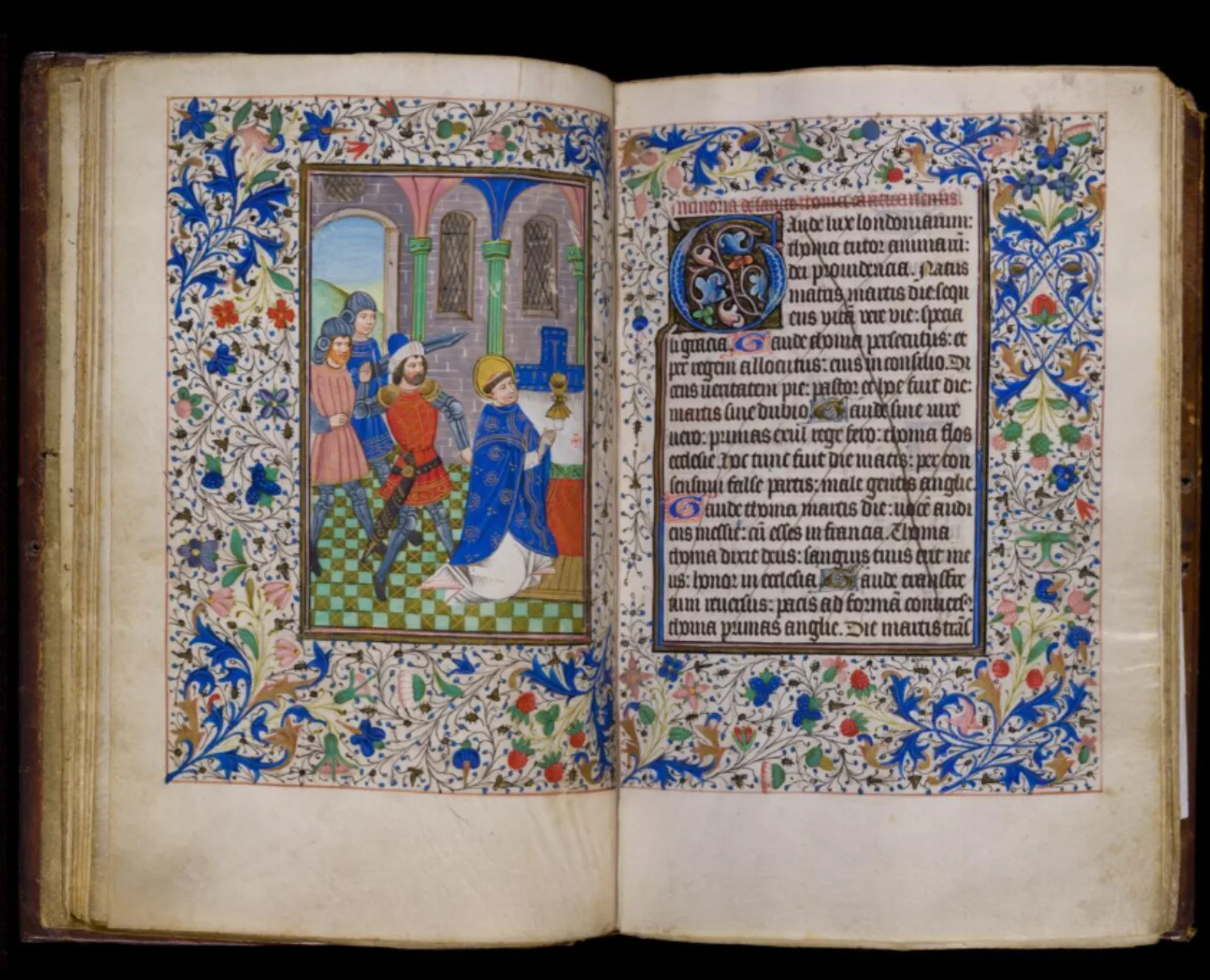
In second place, we have Shakespeare’s First Folio. Printed posthumously in 1623, the so-called First Folio is the first published collection of Shakespeare’s works. Without it, several plays—including Macbeth and The Tempest—might have been lost forever. This collection item also came in second place for the most requested items of 2022, 2023, and 2024!
The Newberry’s copy of the First Folio (to our knowledge) is the only one you’ll find in Chicago but is not the only one in the United States. The Folger Shakespeare Library, which features the collection of legendary bibliophile Henry Folger, holds eighty-two folio copies. However, at the Newberry, patrons are actually able to handle one of these books themselves!
View Catalog Record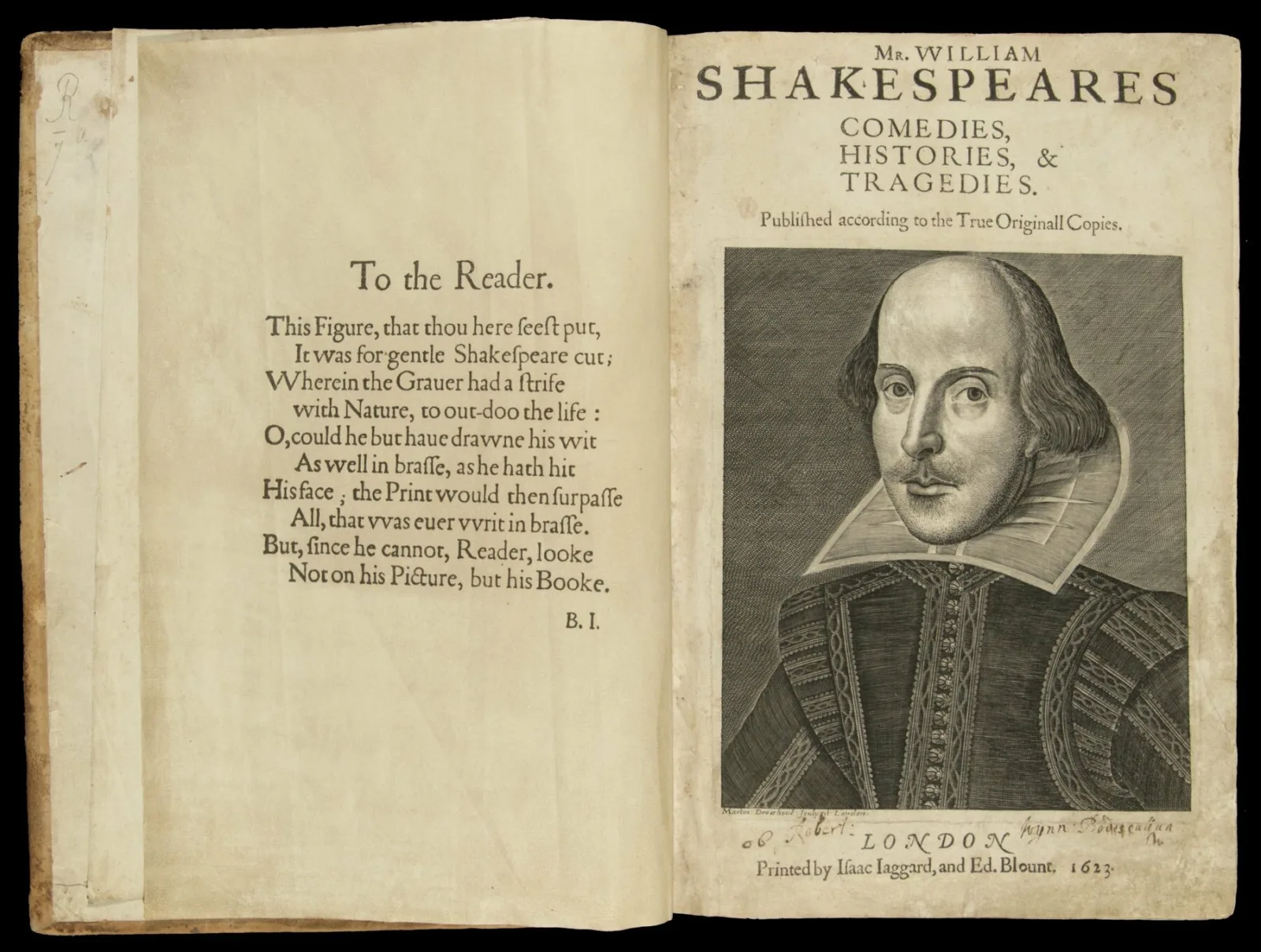
#1. Copy of the Popol Vuh, 1700-1715
The Popol Vuh is a mainstay of the most requested items list year after year! The library receives visitors from all over the world who come to view this culturally significant document.
The Popol Vuh is the creation account of the Mayan people. The text weaves together stories about cosmologies, origins, traditions, and spiritual history. ("Popol" can be translated as "woven mat" and "Vuh" [or "Wuj"] as "book.") The manuscript text of the Popol Vuh is one of four related documents listed in our catalog as Ayer MS 1515, under the title “Arte de las tres lenguas kakchiquel, quiché y tzutuhil.”
The Newberry’s copy of the Popol Vuh was transcribed in the K'iche' language and translated into Spanish between 1700 and 1715 by a Dominican priest named Francisco Ximénez, in collaboration with unidentified K'iche' Maya speakers. Some scholars believe that Ximénez's copy was derived from an earlier version, probably prepared in the sixteenth century by a Native speaker who had learned Latin characters.
View Catalog Record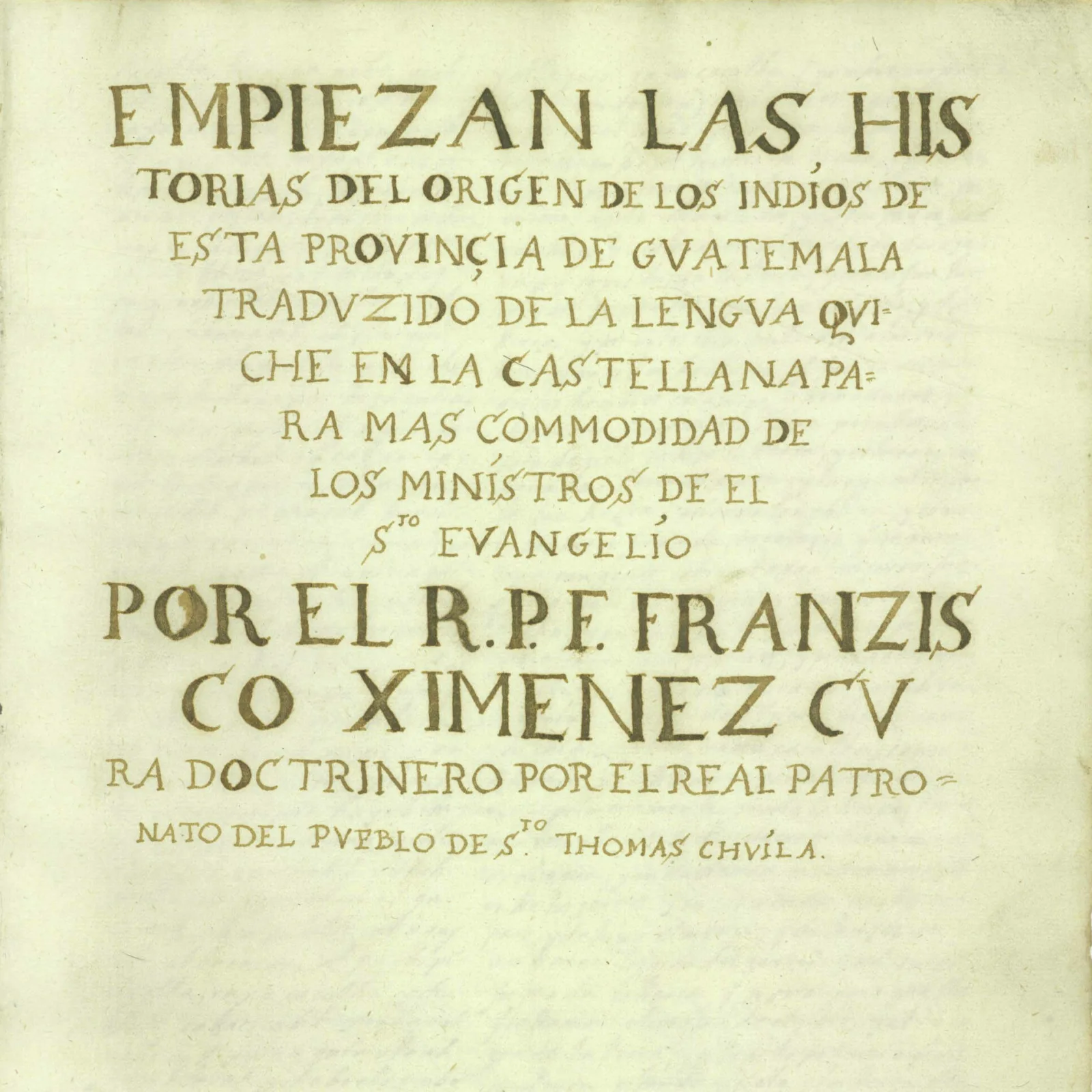
About the Author
Ben Greer is Communications Coordinator at the Newberry.