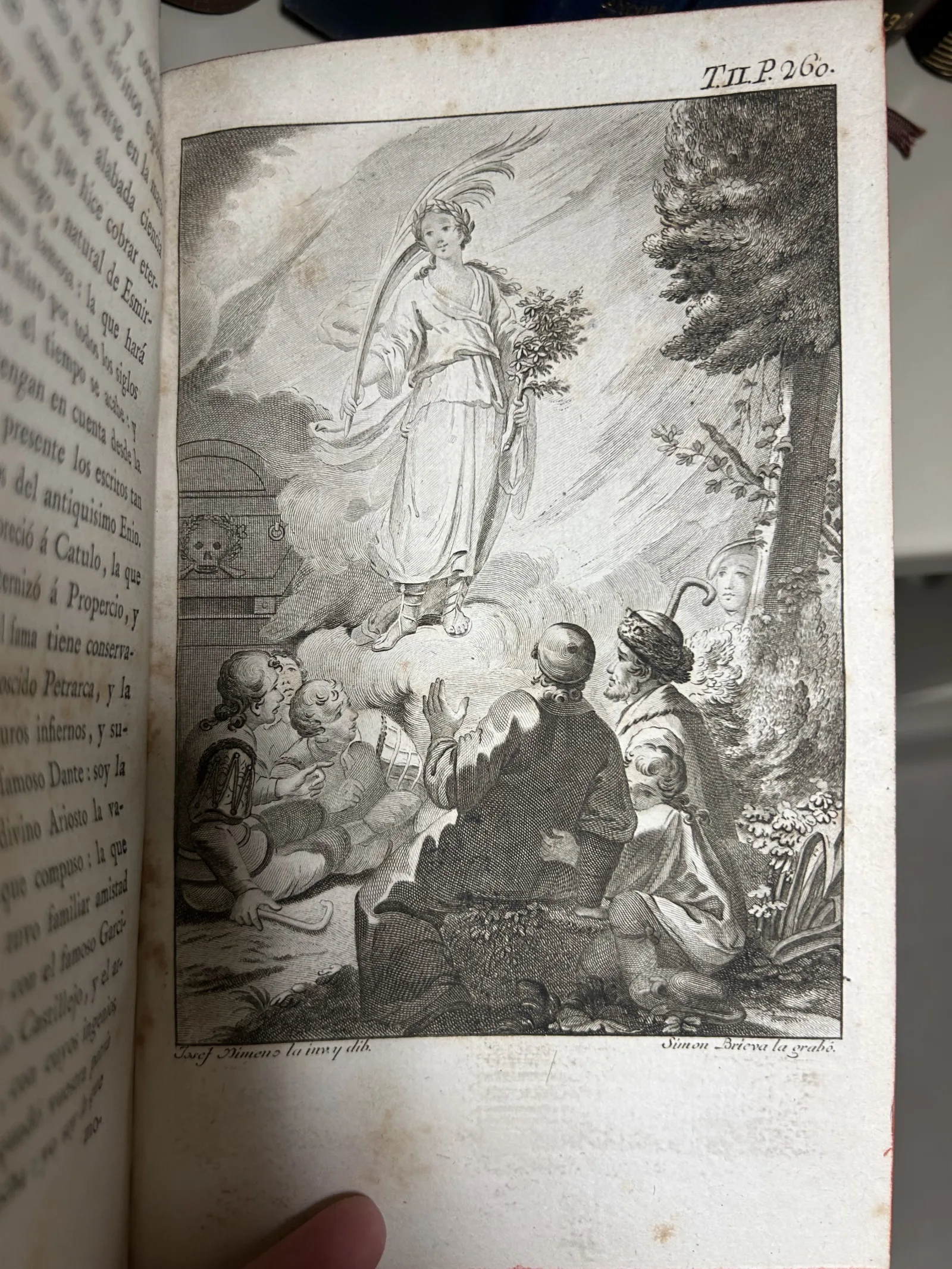
Description
In Cervantes, alegría is a vital, generous, and hopeful lightness—never frivolous, always profound—that opens spaces of lucidity, conviviality, and shared humanity. It may be evoked through notions such as regocijo, gozo, júbilo, deleite, dicha, contento, ventura, buen ánimo, optimismo: forms of creative, philosophical, and affective energy that ease suffering while affirming community, freedom, and imagination. Beyond humor, Cervantine alegría can be understood as a revolutionary stance, a force at once ethical, aesthetic, and intellectual. It is alegría as ethos, poetics, and community: a lucid, profound, and humane disposition that resists despair and sustains a shared horizon of conviviality.
In Cervantes, this alegría emerges as the capacity to live, create, and think together, as well as a gesture of freedom that unsettles tragedy, violence, and rigid hierarchies. Cervantine alegría is thus both individual and communal: a space where invention, irony, and play redefine the very conditions of human life.
Organized by the Cervantes Society of America and co-sponsored by the Instituto Cervantes of Chicago
Organizing Committee
Elizabeth Neary (Minnesota Humanities Center)
Catherine Infante (Amherst College)
Brian Brewer (Trinity College Dublin)
Ryan Schmitz (Texas Christian University)
Sherry Velasco (University of Southern California)
Mercedes Alcalá Galán (University of Wisconsin–Madison)
Schedule
Thursday, October 15
At the Newberry Library
9:30-10:00 am Welcome
10:00-11:30 am Session 1
Panel 1A – Crip Joy in Cervantes: Disability, Conviviality, and Resistance (Baskes Boardroom)
Chair: Catherine Infante
Elizabeth B. Bearden (University of Wisconsin-Madison), “Crip Touches Across Time, or Getting in Touch with Mental Disability in Vidriera”
Pablo García Piñar (University of Chicago), “The Queer-Crip Match of Clara Perlerina (DQ 2.47)”
Alani Hicks-Bartlett (Brown University), “‘Disability Gain,’ ‘Disability Joy,’ and Diagnosis in Cervantes—Or, The Muse as ‘Medicine’ and ‘Regocijo’”
Isabel Jaén Portillo (Portland State University), “Cognitive Disability and Affect in Cervantes's Don Quijote”
Panel 1B – The Joys of Teaching Cervantes's Novelas ejemplares and Theater (Rettinger Hall)
Chair: Mary Quinn
Michael Armstrong-Roche (Wesleyan University), “Teaching La gran sultana as if Our Lives Depended on It”
Charles Patterson (Western Washington University), “The Joy of Teaching Modern Adaptations of El retablo de las maravillas, Part 1: Twentieth-century Spain”
Bruce Burningham (Illinois State University), “The Joy of Teaching Modern Adaptations of El retablo de las maravillas, Part 2: The Americas”
Panel 1C – Language, Translation, and Writing (Lower-Level Classroom B82)
Chair: David Boruchoff
Martha García (University of Central Florida), “Texto, contexto y textualidad: alacer y vivacĭtas en la narrativa de Don Quijote”
Damián Robles (Lamar University), “El arte del vosear y traducir: Transgresiones de agravio y regocijo en la performatividad cervantina”
William Worden (University of Alabama), “The Joy of the Written Word in Don Quixote”
11:30 am-12:30 pm Lunch
12:30-2:00 pm Session 2
Panel 2A – The Persiles – Providence, Pilgrimage, and the Greek Model (Baskes Boardroom)
Chair: Sonia Velázquez
David Boruchoff (Independent Scholar), “Competir con Heliodoro, espejo de la moral y padre de la ficción amorosa”
Lía Tamir (Universidad Hebrea de Jerusalén), “Ventura y providencia en el espacio marítimo del Persiles: una lectura spinozista”
Matthew A. Wyszynski (University of Akron), “Cervantes, Gaudium, and the Joy of Life”
Panel 2B – Moorish and Sephardic Heritage: Alterity and Transmission (Rettinger Hall)
Chair: Julia Domínguez
Christopher Livanos (University of Wisconsin-Madison), “The Enchanted Moor and the Hidden Moorish Past”
Ignacio López Alemany (UNC Greensboro), “Beyond Laughter: The Transmission of Don Quixote in Judeo-Spanish Communities”
Sherry Velasco (University of Southern California), “Lending an Ear to False Captives and Rafala in Persiles”
Panel 2C – Metafiction, Authorship, and Continuation (Lower-Level Classroom B82)
Chair: Brian Brewer
Jaime Hernández Vargas (Dominican University), “Evolución de un tópico caballeresco en El laberinto de amor: la doncella injustamente acusada o la alegría amorosa a través del engaño"
Sara Santa-Aguilar (University of Milan), “Finales cervantinos: consideraciones sobre la risa metaficcional”
Christopher Weimer (Oklahoma State University), “Is There Joy in Avellaneda?: In Search of an Alegría avellanedesca”
2:00-2:15 pm Break
2:15-3:45 pm Session 3
Panel 3A – Echoes and Voices: The Sonic Dimension in Cervantes's Work (Baskes Boardroom)
Chair: Michael Armstrong-Roche
Paul Michael Johnson (Johns Hopkins University), “Echoes of Lepanto: Reliving the Sounds of War in Cervantes's Writing”
Carolyn Mohajeri (Texas A&M University), “Laughing Across Empires: Humor, Orality, and Sacred Irony in Don Quixote”
Louise K. Stein (University of Michigan), “Cervantes and the Invasive Alegría of the Seguidillas”
Panel 3B – Marriage, Gender, and Law in Cervantine Fiction (Rettinger Hall)
Chair: Bruce Burningham
Timothy D. Crowley (Northern Illinois University), “Dorotea's Meta-exemplary Optimism: Virtue, Marriage Laws, and Providence in Don Quixote, Part One”
Eduardo Olid (Muhlenberg College), “The Joy (?) of Marriage in Cervantes”
Sonia Velázquez (Indiana University), “Nobody's Nymph: Sanchica's Anarchic Alegría”
Panel 3C – Material and Sensory Culture: Music, Objects, and Image (Lower-Level Classroom B82)
Chair: Ryan Schmitz
Rosa Helena Chinchilla (University of Connecticut), “Objetos del Nuevo Mundo en varias obras de Cervantes”
Julia Domínguez (University of Delaware), “Preciosa as Pearl: Nature, Value, and Material Knowledge in La gitanilla”
Daniel Holcombe (Georgia College & State University), “Alegría as Transformative Joyful Madness: Quijano to Quixote in Book Illustration”
5:30-7:00 pm Roundtable
At the Instituto Cervantes of Chicago (31 W. Ohio Street. Chicago IL 60654)
Ethos, poética y comunidad: la alegría en Cervantes
Mercedes Alcalá Galán (University of Wisconsin-Madison)
Brian Brewer (Trinity College Dublin)
Adrienne Martín (University of California, Davis)
Cory Reed (University of Texas at Austin)
Moderator: Marsha Collins
Friday, October 16
At the Newberry Library
9:30-11:00 am Session 4
Panel 4A – Cervantine Poetry and the Literary Community (Baskes Boardroom)
Chair: Steven Hutchinson
Magdalena Altamirano (San Diego State University-Imperial Valley), “Alegría y poesía en el primer Quijote cervantino: la serenata de don Luis (I, 42-43)”
Marsha S. Collins (University of North Carolina), “The Joy of Poetry and Cervantes's Viaje del Parnaso (1614)”
Mark Mascia (Sacred Heart University), “Alegría and the Cervantine Lyric: Affirming Community and Creativity in Honoring Others”
Panel 4B – Global Afterlives of Don Quixote I: Reception Across Cultures (Rettinger Hall)
Chair: Sherry Velasco
Moisés R. Castillo (University of Kentucky), “Secuelas del humanismo cervantino: de la Tragedia de Numancia del alcalaíno a la comedia de magia Cerco y ruina de Numancia (1776) de José López de Sedano”
Catherine M. Jaffe (Texas State University), “Feminine ‘alegría’ in La Quijotita y su prima by Lizardi”
Carmela V. Mattza (Louisiana State University), “The Renaixença, the Restoration, and the Question of Popular Culture: Revisiting Don Quixot de Vallcarca”
Panel 4C – Community, Journey, and Shared Storytelling (Lower-Level Classroom B82)
Chair: Sara Santa-Aguilar
Stephen Hessel (Ball State University), “Cervantine Alegría, Trauma, and Communal Storytelling”
Ryan Schmitz (Texas Christian University), “Sacred Travel and Profane Desire: Errancy, Disobedience, and the Joys of Experiential Learning”
Rachel Williams (Johns Hopkins University), “Utopic Alegría: Community and Communality in La Galatea”
11:00 am-1:00 pm Lunch Break
During the lunch break, materials from the Newberry collection will be on display from 11:00-12:00 in the ITW Seminar Room on the first floor.
1:00-2:30 pm Session 5
Panel 5A – Cervantes and the Mediterranean: Captivity, Algiers, and North Africa (Baskes Boardroom)
Chair: Marsha Collins
Luis F. Bernabé Pons and Pino Valero Cuadra (Universidad de Alicante), “Cotidianidad y emoción del cautiverio cervantino”
Steven Hutchinson (University of Wisconsin-Madison), “Lions for Leo Africanus and the ‘Caballero de los Leones’”
Panel 5B – Global Afterlives of Don Quixote II: Contemporary Resonances (Rettinger Hall)
Chair: Carmela Mattza
Christine Garst-Santos (South Dakota State University), “‘Yo sé quién soy’: Alegría as Revolutionary Self-Invention from Cervantes to Bad Bunny”
Bill Little (University of Florida), “La alegría de la hiperrelectura: notas desatadas de El verano de Cervantes de Antonio Muñoz Molina”
Leah Middlebrook (University of Oregon), “Alegría in the Age of AI”
2:30-2:45 pm Break
2:45-4:15 pm Session 6
Panel 6A – Comedy, Satire, and Performance: Cervantes among His Contemporaries and Ours (Baskes Boardroom)
Chair: Magdalena Altamirano
Nuria Alkorta (Real Escuela Superior de Arte Dramático de Madrid), “Dirigir a Cervantes: Claves para la puesta en escena de ‘La Entretenida’”
Shifra Armon (University of Florida), “Quackery in Cervantes, Tirso, and Zamora”
Panel 6B – Theories of Cervantine Humor (Rettinger Hall)
Chair: Cory Reed
Eduardo Aguirre Romero (Independent Scholar), “La ternura humorística en el Quijote”
Fernando Rodríguez Mansilla (Hobart and William Smith Colleges), “El inicio del humor en Don Quijote: el gracioso amigo del prólogo (y Perlícaro en La pícara Justina)”
4:15-4:30 pm Closing Remarks (Ruggles Hall)
Reception following at the Claridge Hotel
Saturday, October 17
Off-Site Activities
Registration
This conference is free and open to all, but space is limited and registration in advance is required. To register, please complete the registration form linked below.
Register Here