Description
This chapter investigates Central American women’s representation in metropolitan DC’s historical record. As Central American women emerged as historical actors in the institutional archive, they were associated with domesticity. In some instances, they were spatially relegated to the basement. After 1968, Central American women filled a labor gap left by African American women because of the Civil Rights Movement. The basement—a feature in many mid-Atlantic houses—became the home for many Central American domestic workers, some of whom were undocumented. As opposed to understanding the basement as a site of submission, Central American women’s photographs and oral histories tell a different story. I argue that the basement is the site from which Central American women navigate illegality through intimate acts. Building Latina’s reproductive labor scholarship, I theorize the embodied practices that undocumented Central American mothers, employed as domestic workers, used to navigate the interstices of race, gender, and illegality. In short, this chapter outlines the corporeal and affective strategies undocumented Central American mothers developed to sustain themselves and their families transnationally
About the Presenter
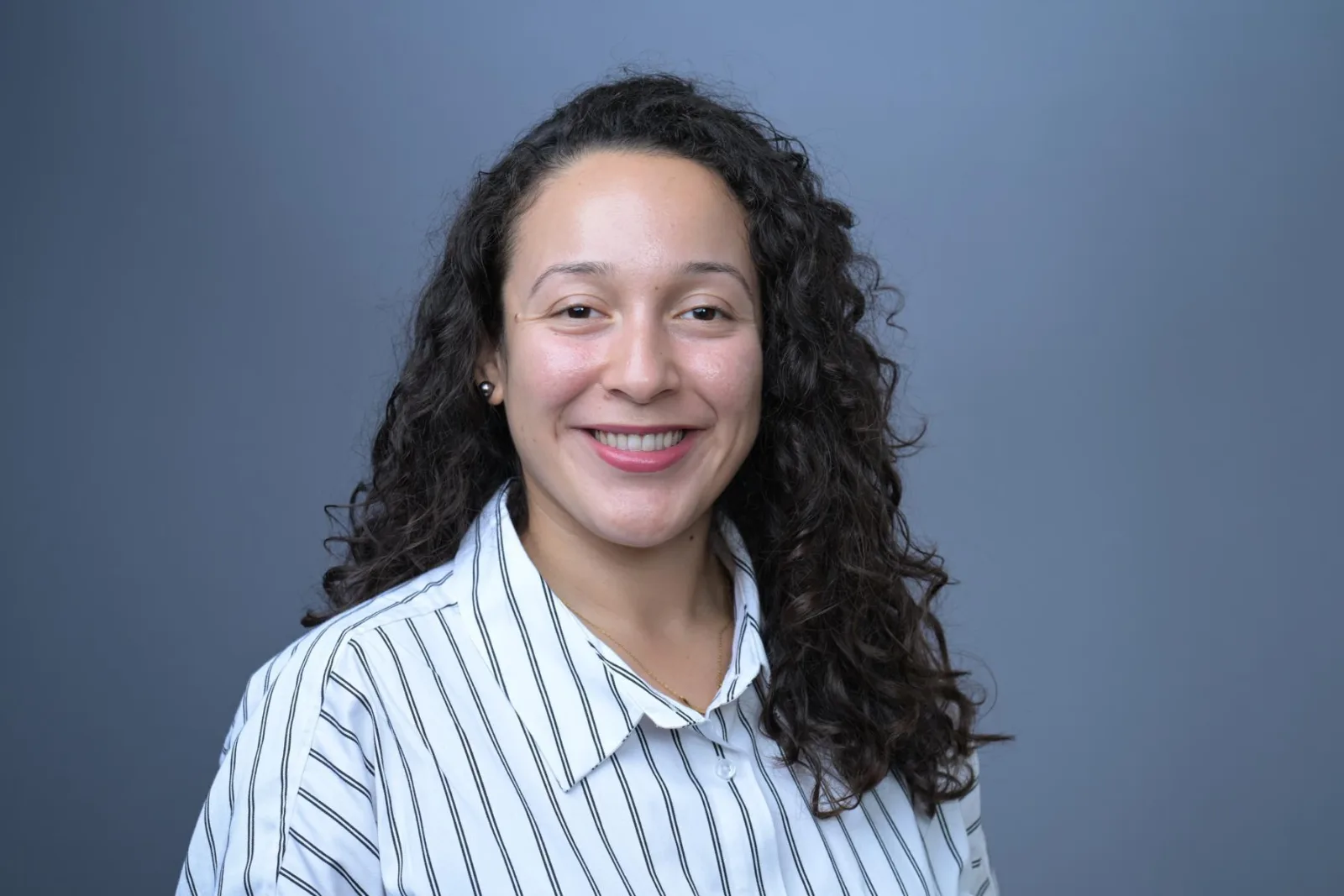
Wanda Hernández is a scholar and cultural worker. She is an Assistant Professor of Central American and Latinx Studies at the University of Texas at Austin. Hernández’s research interests broadly revolve around questions of race, space, and performance as they pertain to Central Americans and Latinxs, more broadly. Her research has been published in NACLA: Report on the Americas and Public Humanities. Her current manuscript-in-progress, Performing Archives: Central Americans, Race, and Embodied Knowledges, examines how archives represent Central Americans in metropolitan Washington, DC between 1960 to 2000. In recent years Hernández has also curated exhibitions like Siempre Aquí (2021) and produced community-based theatre, such as Little Central America, 1984 (2023).
Respondent
Karina Alma, University of California Los Angeles
Register
This event is free to all faculty, grad students, and interested members of the public, but all participants must register in advance. Space is limited, so please do not request a paper unless you plan to attend.
Register and Request PaperQuestions?
Email UsAbout the Borderlands and Latino/a Studies Seminar Series
The Borderlands and Latino/a Studies Seminar examines the interplay of Latino/a people, communities, and culture in the United States; transnational and comparative borderlands studies; migration studies; Latino/a gender and sexuality; changing urban landscapes as a result of Latino/a settlement; civil rights and social movements; Critical Indigenous Studies; and other related topics.
The seminar’s co-organizers are Emiliano Aguilar (University of Notre Dame) María Eugenia López-García (University of Illinois at Chicago), and Ivón Padilla-Rodríguez (University of Illinois at Chicago).
The seminar’s co-sponsors are Indiana University’s Latino Studies Program, Northwestern University’s Program in Latina and Latino Studies, The Institute for Latino Studies at the University of Notre Dame, the Center for Latino Research at DePaul University, the Katz Center for Mexican Studies at the University of Chicago, and the University of Illinois at Chicago Latin American and Latino Studies Program.
Learn More About Scholarly Seminars