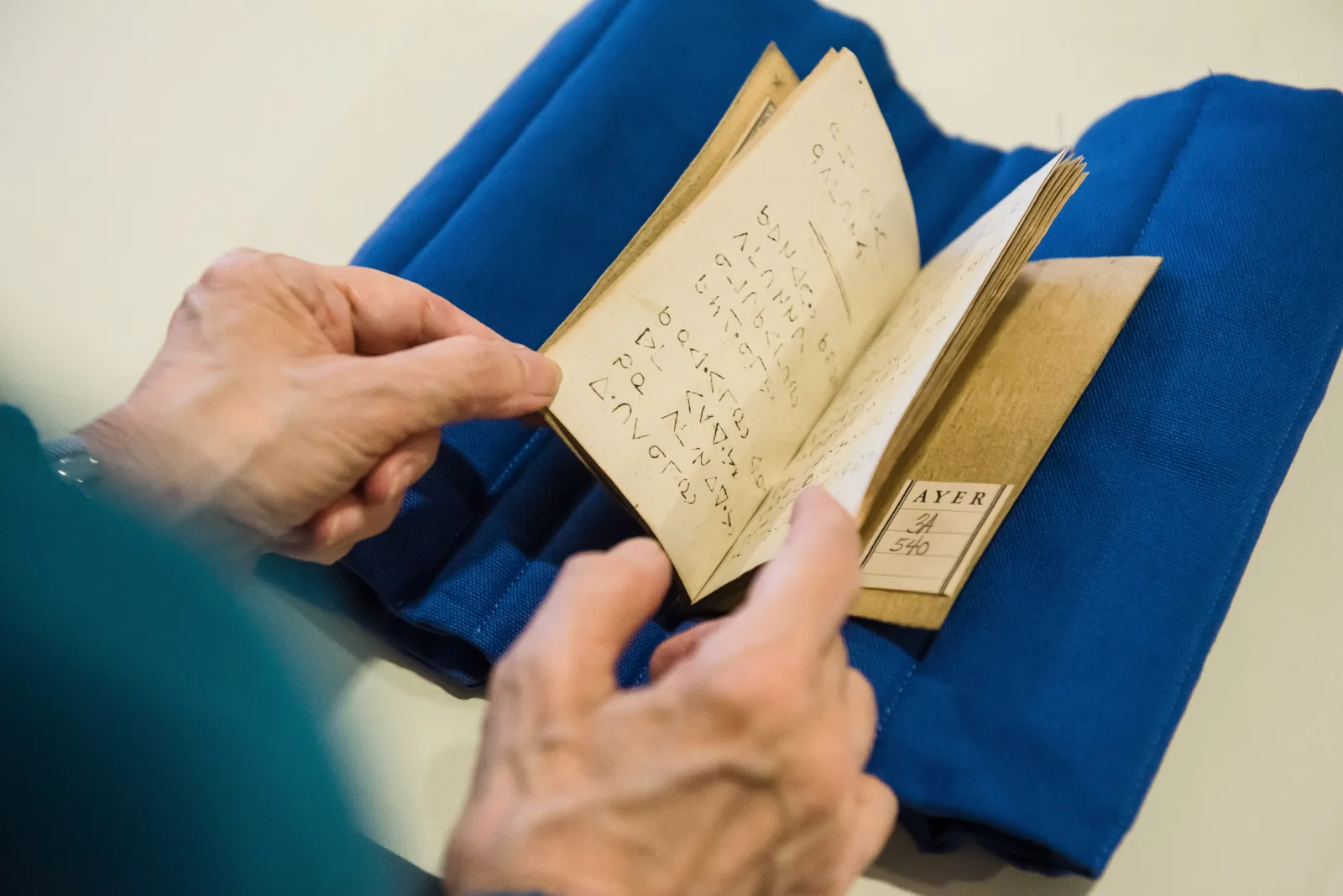
Course Description
This training equips tribal cultural workers with practical methods for locating, interpreting, and recontextualizing Indigenous-related historical materials in libraries and archives. Many such materials remain difficult to access due to colonial collecting practices, and they frequently require careful reinterpretation to counter colonial narratives. Led by Indigenous historians, the training centers Indigenous methodologies for historical research. Participants will identify strategies for navigating colonial collections, apply Indigenous historical methods to colonial sources, and identify opportunities to translate historical research into practical applications. While many tribal cultural workers already undertake this work in their communities, the program provides focused instruction, shared frameworks, and mentorship to strengthen and expand these practices. Emphasizing community-based applications, the program supports participants in developing a research project plan tailored to their community priorities. Ongoing mentorship following the training will assist participants in navigating colonial collections and advancing Indigenous archival recovery initiatives.
About the Instructors
David Aiona Chang is a professor of history and American Indian Studies at the University of Minnesota where he teaches on Indigenous history and American history. He has published one book on the Muscogee (Creek) Nation (The Color of The Land: Race, Nation, and the Politics of Landownership in Oklahoma) and another on Native Hawaiian history (The World and All the Things upon It: Native Hawaiian Geographies of Exploration). A new book he wrote in collaboration with the Shingle Springs Band of Miwok Indians will be published soon. He is currently working on a project about Indigenous poetry in the nineteenth century. He is a Kanaka Maoli (Native Hawaiian), a father of two, and enjoys working with community members.
Elizabeth Ellis is an associate professor of history at Princeton University where she teaches early American and Native American history as well as Indigenous studies. Her first book is “The Great Power of Small Nations: Indigenous Diplomacy in the Gulf South.” She is currently researching early Native American iconography and working on a collaborative project on eighteenth-century painted deer hides (minohsaya). Liz also writes about contemporary Indigenous issues and political movements. She is a citizen of the Peoria Tribe of Indians of Oklahoma, and she serves as the tribal history liaison for her nation.
Logistical Details
The course consists of five full days (approximately 30 hours) of instruction and research time at the Newberry Library in Chicago. Fifteen accepted participants will each receive a $1,500 participation honorarium and will have all travel and hotel expenses paid. Breakfast and lunch will be catered and available to participants for all five days of the program and participants will receive a food stipend for additional meals.
Application Details
Applicants must be working for or on behalf of a federally recognized tribal nation in the U.S.
The application consists of two required components:
- A statement of no more than 1000 words describing your interest in the program and how the skills gained will impact the tribal nation with which you are connected
- A letter of support from the tribal nation you are working for or with
To apply, please submit your application materials through the form linked below.
Applications are due January 5, 2027.
Apply HereFrequently Asked Questions
The letter of support should meet the following criteria:
- The letter is an official tribal document (e.g. written on a tribal letterhead) and includes the date, signature, and contact information of the author
- The author is someone within the tribal nation with the authority to issue such a letter who can speak to the applicant’s work (e.g. department head; elected official)
- The letter clearly names the applicant and states that they have the support of the tribal nation to participate in this training. This could include a brief overview of the applicant’s work with the tribal nation and how the applicant’s participation in the training will advance tribally identified priorities.
A template for the letter of support can be accessed at the link below. The template is a starting point and should be adapted as needed to suit your circumstances. [Brackets] indicate places where you might want to add specific names or information.
Yes! We welcome applicants from a variety of experience levels, backgrounds, disciplines, and skillsets, including those who have little or no existing familiarity with archival work. In some cases, applicants may already have some archival experience without even realizing it. The training’s small cohort size and mentorship model provide ample opportunity for participants to leave with new skills and connections, no matter the level of archival experience they had at the start. Ultimately, the review committee will want to see that:
- The applicant has a demonstrated interest in the training, as indicated by the required statement of interest
- The applicant’s participation in the training supports and/or aligns with the priorities of the tribal nation, as indicated by the required letter of support
Yes. As long as the applicant has the support of the tribal nation (as indicated by the required letter), the applicant themselves does not have to be Native and/or a citizen of that tribal nation.
Yes, though applications will be assessed in the context of the full applicant pool. As such, there is no guarantee that all applicants affiliated with the same tribal nation will receive a training spot. Efforts will be made to ensure that a diversity of Native nations is reflected in the 15-person cohort.
Each participant will receive a $1,500 participation honorarium. Additionally, the Newberry will pay for each participant’s travel to/from Chicago and five nights at a local hotel. Breakfast and lunch will be catered and available to participants for all five days of the program, and participants will receive a separate per diem stipend for dinners on their own.
All accepted applicants will be notified by late January 2027.
Yes! This training will be offered annually over the next five years. The application for the 2028 training will open in fall 2027.
Further Questions?
Please contact the McNickle Center staff with any questions or concerns about the training or the application process.
Email UsTribal Outreach and Collaboration at the Newberry
In 2026, the Newberry Library received a grant from the Mellon Foundation to fund community-led research, digitization, and training—ensuring that tribal nations have greater access to and control over the presentation of historical materials that contain their histories and knowledge. Through this work, we seek to transform the traditional archival relationship, in which Native nations must navigate institutional systems alone and have little to no power over how their histories are represented. In contrast, we aim to provide tools, resources, and infrastructure allowing for self-determined use of collections and enacting a transformative stewardship model in which Native nations determine who can access culturally sensitive knowledge. The Historical Methods Training is a large part of this work.
To learn more about the different ways the Newberry can collaborate with your tribal nation, please visit our Tribal Outreach page.