Center for Renaissance Studies
Serving an international consortium of universities, the Center for Renaissance Studies connects students and scholars with unique opportunities to learn, research, and contribute to the vibrant fields of medieval and early modern studies.
A Newberry fellow looks through an illuminated manuscript from our collections.
A Modern Approach to Medieval and Early Modern Studies
Upcoming Programs
View CalendarConsortium
Scholars of all career levels come from all over the world to hone their research skills and make discoveries in the Newberry's collections of medieval and early modern manuscripts, printed books, and other materials. If your university is a member of the Center for Renaissance Studies consortium, you may be eligible for funding to research or take part in a variety of programs at the library.
Projects
Through exhibitions, publications, and digital resources, the Center for Renaissance Studies creates space for scholars to cultivate new ways of seeing the world and ignite conversations that change how we relate to the past.
The center is currently at work on an exhibition about how ideas of "race" took root in the medieval and early modern past.
Paleography
Paleography is the study of handwriting. More than that, it's a critical skill for unlocking the past. By learning to decipher different handwriting styles, you open yourself to a world of research possibilities. The Center for Renaissance Studies provides hands-on, in-depth training in reading difficult early scripts.
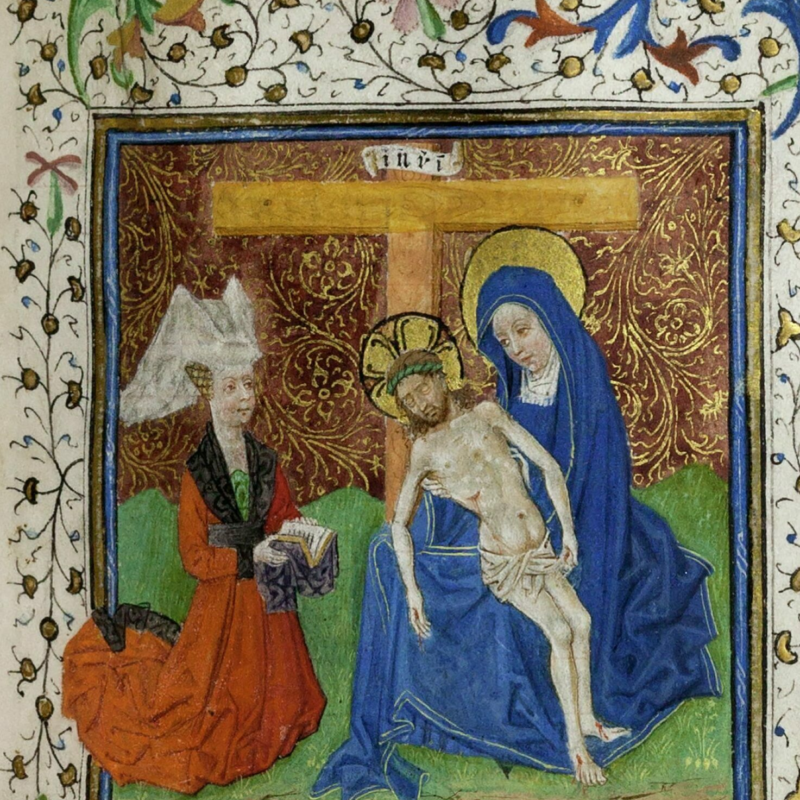
Digital Resources for Scholars
Free online research and educational tools inspired by our collections.
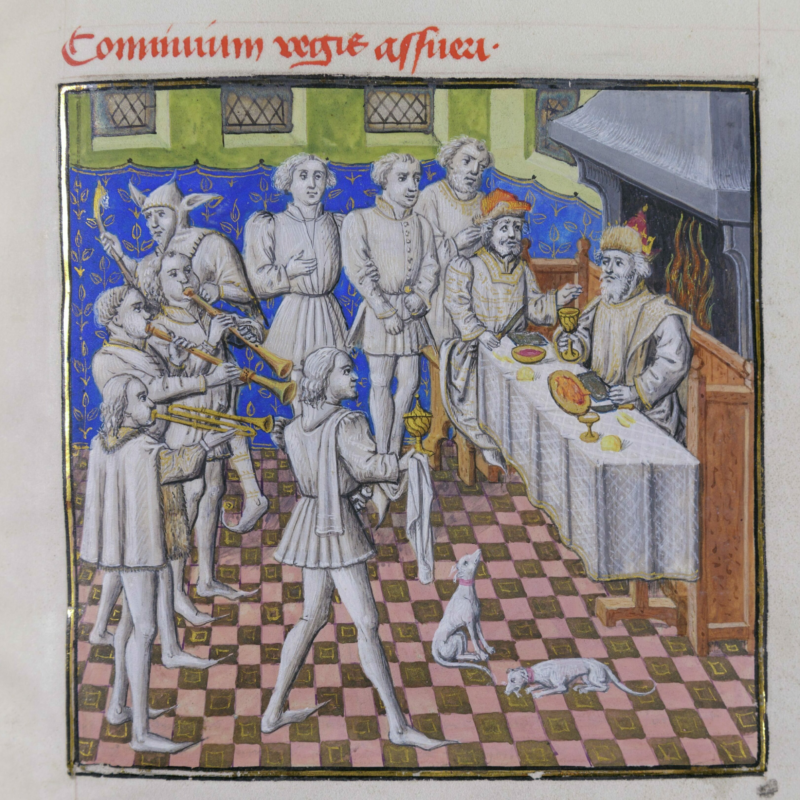
Digital Resources for Teachers
Primary sources selected by educators, with essays and discussion questions for use in the humanities classroom.
About the Center for Renaissance Studies
Our YouTube Channel
View past programs, lectures, and behind-the-scenes collection videos from the Center for Renaissance Studies.
Annual Report
In 2025-2026 the Center for Renaissance Studies created programs in new formats, co-hosted conferences in venues far beyond the Newberry, and made progress on several scholarly publications.
Brochure
Our brochure lists the entirety of our 2026-2027 programs, including graduate courses, fellowships, institutes, research methods workshops, talks, lectures, and conferences.
Staff
Lia Markey (Ph.D., University of Chicago) is the Director of the Center for Renaissance Studies. Her publications include a monograph, Imagining the Americas in Medici Florence (2016), and two edited volumes, The New World in Early Modern Italy, 1492-1750 (2017) with Liz Horodowich, and Renaissance Invention: Stradanus’s “Nova Reperta” (2020). She teaches at the University of Chicago and Northwestern University and has held fellowships at the Folger Library, the Warburg Institute, the Villa I Tatti, the Metropolitan Museum of Art, and the Herzog August Bibliothek. Lia participates in the Getty Connecting Art Histories Research Group, “Spanish Italy and the Iberian New World.” Along with Rebecca Fall, Christopher Fletcher, and Noémie Ndiaye, she co-curated the Newberry exhibition Seeing Race before Race (fall 2023) and co-edited with Ndiaye the related publication by the same name.
Christopher D. Fletcher is the Assistant Director of the Center for Renaissance Studies. He earned his PhD in Medieval History from the University of Chicago in 2015. His research and teaching focus primarily on religion and public engagement before 1800. He has written articles and book chapters and co-edited volumes on various forms of public outreach in medieval and early modern Europe and the digital humanities. His book, Public Engagement in the European Middle Ages
Medieval Solutions for a Modern Crisis (ARC Humanities, 2025), uses medieval practices of public engagement to prepare medievalists to more effectively reach diverse audiences today. He was a co-curator of the Seeing Race Before Race exhibition, and often shares the Newberry’s pre-1800 collections with the public through in-person collection presentations, exhibitions, social media, and digital resources.
Dylan Bingham is the Program Manager for the Center for Renaissance Studies. She received a Bachelor's degree in Art History, with a concentration in Italian Renaissance Art, from Hollins University in 2015. Her work focuses on women in portraiture, with a focus on depictions of motherhood and socioeconomic status. Dylan will be pursuing her Master's in History at DePaul University beginning Fall 2024.
Have a Question?